Lima Airport Guide 2026: New Jorge Chávez Terminal & Transfers
Updated Date:
Quick Summary
Lima’s Jorge Chávez International Airport (code LIM) now operates from a brand-new terminal in Callao, with vehicle-only access via Av. Morales Duárez and the old terminal closed to passengers. Expect roughly 35–60 minutes to the Historic Center, 45–70 minutes to Miraflores and a bit more to Barranco, depending on traffic. For most travelers, the official Airport Express Lima bus is the easiest and safest way to get from Lima Airport to Miraflores, as there is no practical metro or public bus directly into the new terminal and taxis/apps require more care. Inside the airport you’ll find free Wi-Fi, ATMs, money exchange, SIM/eSIM kiosks, food, shops, lounges, luggage storage and nearby hotels/sleep pods, and while the terminal itself is generally safe, it’s best to use official transport options and avoid wandering outside with luggage at night.
Need to know (Lima Airport 2026)
It’s a brand-new terminal – All flights now use the new Jorge Chávez terminal in Callao, on Av. Morales Duárez (the old terminal is closed to passengers).
You must arrive by vehicle – Access is via bridges with no pedestrian sidewalks, so you can’t realistically walk in from outside; plan Airport Express Lima, taxi or private hotel shuttle.
Traffic is slow and unpredictable – Allow 45–70 min to Miraflores, a bit more to Barranco, and always add extra time at rush hour or before international flights.
Best way to Miraflores– The Airport Express Lima bus is the easiest and safest option: official airport bus, fixed route, Wi-Fi and big luggage space.
No metro / city bus inside the terminal – There is currently no practical train or local bus that runs directly into the new terminal, especially if you have bags.
Taxis and apps work, but be picky – Use official airport taxis or ride-hailing apps, not random drivers in the arrivals hall, and confirm the price/route before you go.
English is spoken, but not everywhere – Airline and Airport Express staff usually speak some English; many taxi drivers and shop staff will not, so have your hotel address written down.
You can get online and get cash on arrival – Free airport Wi-Fi, ATMs, currency exchange and SIM/eSIM kiosks are available in the arrivals area.
Sleeping and showers are possible – There are lounges, nearby airport hotels and sleep pods for long layovers or ultra-early departures.
It’s generally safe inside – The terminal itself is well-policed; the higher risk is outside with taxis and in surrounding streets, so stick to official transport and don’t wander with luggage at night.
How we made this guide (trust & recency block)
Our team lives in Lima, flies in and out of Jorge Chávez regularly, and spends most days talking to travelers on our walking tours – hearing what confused them, stressed them, and surprised them.
To build this New Lima Airport 2026 guide we:
Tested routes and transfers between the new terminal, Miraflores, Barranco and the Historic Center at different times of day to get real door-to-door times.
Cross-checked details with official sources (airport, airlines, transport providers) so layouts, opening hours and procedures are accurate and current.
Turned thousands of traveler questions (taxis, safety, traffic, Wi-Fi, SIMs, sleeping, layovers) into the structure and priorities of this page, cutting out generic “airport fluff.”
Where the new airport is & what actually changed
The new Jorge Chávez terminal is still in Callao, but it’s now on the north side of the runway with its entrance on Av. Morales Duárez, while the old terminal on the south side is closed to passengers (and still shows up on many maps). The new access is built for vehicles only, over elevated bridges with no real pedestrian sidewalk, so you’ll always need a bus, taxi, shuttle or private car to reach the doors.
Key things to know
District: Callao, north side of the runway
Entrance: Av. Morales Duárez (new terminal), not the old terminal road
Old terminal: Closed to passengers but often still appears as “Lima Airport” on maps
How to set it in apps: Choose the pin on Av. Morales Duárez / “new terminal” or “Nuevo Aeropuerto Jorge Chávez”
Access type: Vehicle-only bridges and ramps; not walkable with luggage
Typical travel times:
Historic Center: ~35–60 minutes
Miraflores: ~45–70 minutes
Barranco: ~55–85 minutes
Biggest variable: Traffic on the expressways and Morales Duárez itself
Access via Av. Morales Duárez – the one-road problem
Almost all cars, taxis, shuttles and buses must use Av. Morales Duárez to reach the terminal, which means any accident, protest or heavy port traffic can slow everyone at once. It’s simple on a map but fragile in real life, so plan around it:
Avoid peak hours when you can: roughly 07:00–09:00 and 17:30–20:00
Add a buffer: +30–45 minutes on top of normal travel time before flights
Check live traffic on Google Maps/Waze before you leave your hotel
Use organized transport (like Airport Express Lima or pre-booked shuttles) that already factor typical congestion into their schedules
Destination connecting the new Lima Airport
Domestic destinations (within Peru) connected to Lima Airport (LIM)
International destinations connected to Lima Airport (LIM)
Amsterdam · Antofagasta · Atlanta · Bogotá · Buenos Aires · Cancún · Cartagena · Córdoba · Guayaquil · Houston · Iguazú · Los Angeles · Madrid · Medellín · Mexico City · Miami · New York · Oranjestad · Panama City · Paris · Punta Cana · Quito · Rio de Janeiro · Salta · San José · San Salvador · Santa Cruz · Santiago · São Paulo
Terminal layout & wayfinding
The new Jorge Chávez terminal is one big “single” terminal with four passenger levels plus a basement, roughly three times larger than the old airport and expanding toward 270,000 m² of space. It looks huge on arrival, but day-to-day it’s actually quite simple: Level 1 = arrivals, Level 2 = food & shops + pedestrian access, Level 3 = departures.
Mental map in 10 seconds
Level 1: Arrivals, baggage claim, customs, ground transport (Airport Express Lima, taxis), general services.
Level 2: Rental car companies, cafes and restaurants and sleeping pods.
Level 3: Check-in, self-service kiosks, security, immigration (departures) and most gates. Big commercial/food area.
Level 4: VIP lounges (The Club LIM, LATAM lounge, LAP protocol lounge) and quieter seating.
Level 1 – Arrivals & ground transport
Level 1 is where you end up after any flight, domestic or international:
Immigration (arrivals): for international passengers.
Baggage claim: six modern carousels with new baggage systems.
Customs: quick red/green channel-style exit.
Ground transport: direct access to Airport Express Lima and official taxis.
General services: ATMs (BCP, BBVA, Interbank, Scotiabank), currency exchange desks, a post office, medical assistance, luggage storage, and airport information counters to help with any questions.
Useful shortcuts
If you’re taking Airport Express Lima: follow signs, it’s located just a few steps away from Exit 2 and 3.
If you just need cash/SIM: ATMs, money exchange and SIM kiosks are right in or near the arrivals hall, before you go outside.
Level 2 – Rental car companies, cafes and restaurants and sleeping pods.
Level 2 is where you’ll find more services and space to wait for your flight.
Restaurants: A large open food area with Peruvian brands, cafés, bars and quick bites such as Dunkin’ Donuts, Tanta, Delicass and Starbucks.
Banks: ATMs (BCP, BBVA, Interbank, Scotiabank) plus an Interbank branch for more complex banking needs.
Sleeping pods: Sleep ‘n Fly Lounge, offering sleeping pods and rest areas for transit passengers.
Rental cars: Most major rental car companies (Alamo, Avis, Budget, Hertz) are located on the left-hand side of the terminal.
Useful shortcuts
Need a universal adapter? Don’t worry: on Level 3 you’ll find the Coolbox store, where you can buy adapters and other travel accessories.
Early and hungry? Eat on Level 3 before going through security; there’s usually more choice landside than at some gates.
Level 3 – Check-in, security & departure gates
Level 3 is where departures actually happen:
Check-in hall: Around 90+ manned counters plus 40+ self-service kiosks, with more being added, grouped into large islands by airline.
Security & TUUA (airport tax): The airport tax is now included in your ticket, so you just go straight to multi-lane security with new CT scanners (in most cases you don’t need to remove laptops or liquids).
Departures immigration: For international outbound flights, immigration is located right after security.
Boarding gates: Domestic, international and “mixed” gates all depart from this level.
Perusuyo food zone: A large food and drink area near departures with Peruvian snacks, coffee and casual dining.
Examples of shops and brands: Oasis del Sol, Hugo Boss, Ilaria, Alpaca 111, Kuna
South American airlines:
Avianca · JetSMART · LATAM · Sky Airline (Sky) · Star Perú · Aerolíneas Argentinas · Boliviana de Aviación · Copa Airlines
International airlines (Europe & North America):
Air Europa · Air France · Iberia · KLM · Plus Ultra · Aeroméxico · American Airlines · Delta Air Lines · United Airlines · Volaris
Useful shortcuts
Short on time? Go straight to Level 3, check-in and clear security first, then explore food options on the airside side of Perusuyo.
Connecting international → domestic: you’ll usually have to collect bags, go to Level 3, re-check and go back through security, so plan at least 3 hours between flights.
Lost or confused? Big flight information screens and information desks are concentrated on Level 3; ask there before you start wandering.
Level 4 – Lounges & quiet corners
Level 4 is all about lounges and calm spaces:
The Club LIM (VIP lounge): pay-in / Priority Pass-type lounge serving international departures, with showers, buffet, bar, work areas and a kids’ corner.
LATAM lounge: airline lounge for eligible LATAM passengers, also on this level overlooking the departures hall.
Servicio Protocolar lounge: premium LAP protocol lounge for those who book the full VIP escort service.
Quieter seating: a few seating zones away from the gate crowds—good if you just want a quieter corner without paying for a lounge.
Useful shortcuts
Need to really rest/work: go up to Level 4 and either pay into a lounge or find a quieter seating pocket near the lounges.
Priority Pass / Lounge Key: head straight to The Club LIM signs on Level 4 after clearing security and checking your gate.
No lounge access but early: it can still be worth riding the escalator up to Level 4 to get away from the noise on Level 3 for a bit.
New Lima Airport arrivals: from plane door to exit
A quick walkthrough of what happens after you land at the new Jorge Chávez terminal.
Immigration – biometrics & wait times
For international flights, immigration comes first:
Follow the “Arrivals / Llegadas” signs from the gate.
Join the line for Foreigners / Extranjeros (or Peruvians).
Have your passport ready; the officer may ask a couple of simple questions.
They often take a photo and fingerprints, which can slow things down when several flights arrive together.
Typical wait: 10–45 minutes, depending on how many planes land at once.
Baggage claim, customs & red/green channel
After immigration you reach baggage claim:
Check the screens for your carousel number.
Bags often take 20–30 minutes at busy times.
Grab a trolley if you have heavy luggage.
Then you pass Customs (Aduanas):
Follow the signs to the red/green channel exit.
Green if you have nothing to declare, Red if you do or are asked to stop.
Officers may randomly scan or open bags, especially if you have lots of luggage or electronics.
For exact duty-free limits, check official Peruvian customs info before you fly.
First things to do after customs
Once you step into the arrivals hall, sort the basics before going outside:
Wi-Fi: Connect to the free airport network to message family and check hotel/transport details.
Cash: Use an ATM to get some soles; there are also currency exchange desks.
SIM/eSIM: Visit a mobile kiosk to set up data (passport may be required).
Tourist info: Look for the IPERÚ desk for free, official help on routes, safety and trips.
Transport:
If you’re going to Miraflores, follow signs to Airport Express Lima just a few steps away from Exit 2 and 3.
Otherwise, confirm the meeting point and price for your hotel shuttle, taxi or rideshare before leaving the building.
Transport from Lima Airport (LIM) to Miraflores & the city (2026)
Getting into Lima is where most of the stress (and scams) can happen, so it’s worth choosing your option before you land. Here’s the short, honest breakdown.
Airport Express Lima – official bus and best option for most travelers
Airport Express Lima is the official airport bus that runs between the new terminal and several stops in Miraflores.
What it’s like:
Route: New Lima Airport ⇆ key points in Miraflores (near Parque Kennedy, the malecón and hotel area)
Frequency: Regular, timed around main flight waves (day and evening).
Luggage: Big suitcases and backpacks go in the hold; no strict limit and staff help you load/unload.
On board: Wi-Fi, USB ports, air-conditioning, comfortable seats – designed for travelers, not commuters.
Language: Staff are used to non-Spanish speakers and can tell you which stop is closest to your hotel.
How to book
You can buy your ticket at the Airport Express Lima counter on Level 1, right outside between Exits 2 and 3 (card and cash accepted), or book in advance online through the official Airport Express Lima website and just show your confirmation when boarding.
Miraflores stops (2026):
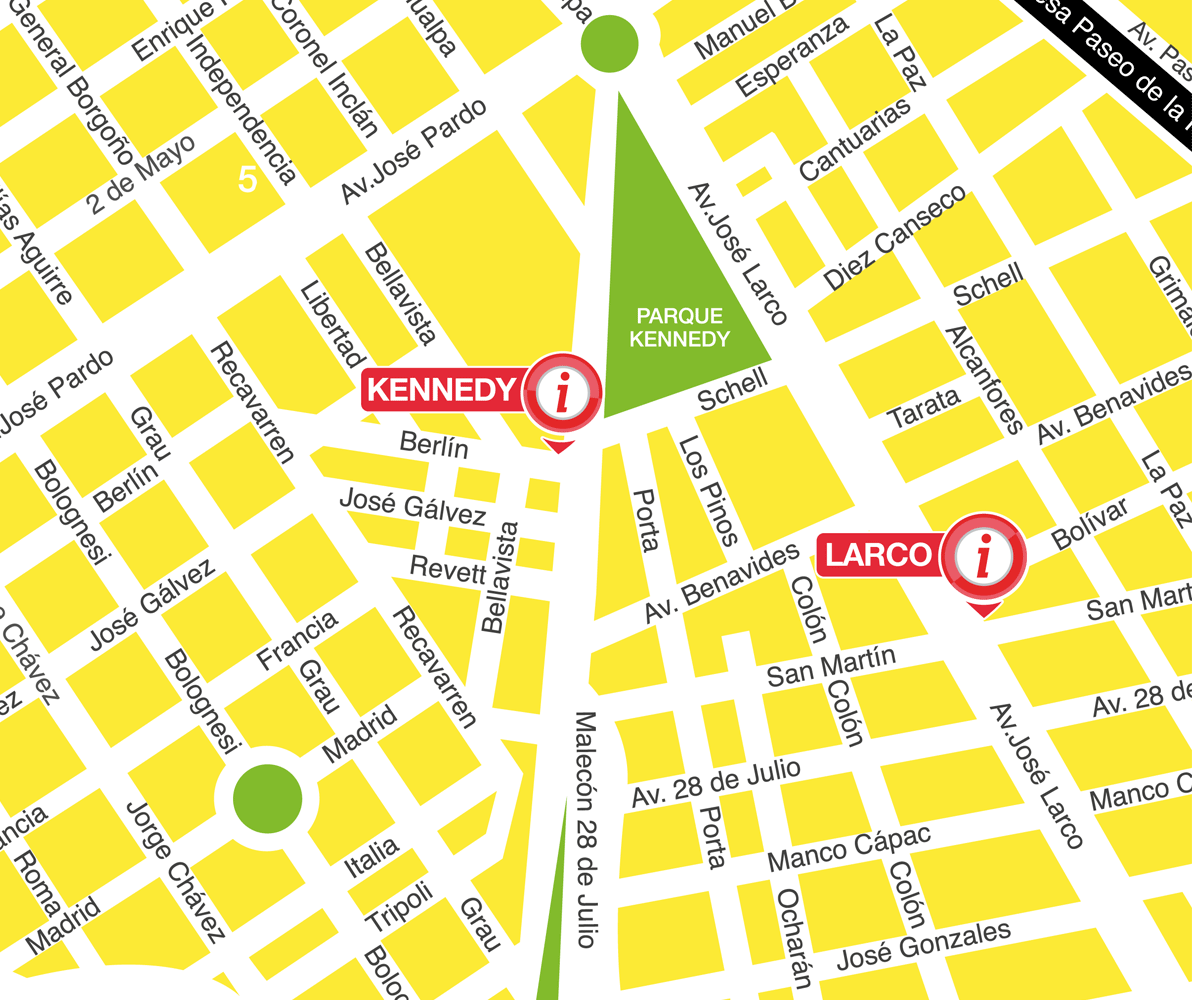
Marriott / Larcomar – clifftop mall and hotel zone with Pacific Ocean views.
Tourist Information Center – Av. Larco – central and handy for many hotels.
Parque Kennedy – heart of Miraflores, surrounded by restaurants and cafés.
Hotel Boulevard – Av. José Pardo – good for accommodation along Pardo and nearby streets.
Best for:
First-time visitors to Peru or South America
Solo travelers and couples with luggage
Families, small groups and sports teams
Anyone who wants clear pricing, Wi-Fi and a low-stress first hour in Lima
Taxis & ride-hailing apps
You’ll find official taxi counters between exit 1 and 2 where you can buy a ride at a fixed price, and you can also use apps like Uber or Cabify.
Pros
Door-to-door to any address in Lima (handy if you’re not staying in Miraflores/San Isidro).
Available very early/late, when buses are less frequent.
Cons
Prices can surge with demand or traffic.
Some confusion around pick-up points near the terminal lanes, most in ride-hailing taxis.
You’ll meet people offering “taxi amigo” in arrivals – best to avoid them and stick to official counters or app bookings.
Good option if you know Lima a bit or arrive outside Airport Express Lima’s hours.
Hotel shuttles & private transfers
Several hotels close to the airport (like Wyndham, Holiday Inn and Sleepover) offer free or paid shuttles to and from the terminal. Many Miraflores and Centro hotels can also arrange a private transfer.
Best for:
Late-night arrivals when you just want someone waiting with your name on a sign.
Families, older travelers, or anyone with lots of luggage who prefers a pre-booked, fixed-price option.
They’re usually more expensive than Airport Express Lima, but also very low-stress.
Public buses & (future) Metro Line 2
Right now, no public bus drives into the new terminal, and stops on nearby avenues require walking along busy roads with luggage. It’s cheap but confusing and not recommended for first-time visitors.
Metro Line 2 is being built and will have an “Aeropuerto” station near the old terminal, not the new one – and it’s not fully open yet.
As of 2026, there is no practical metro or city bus directly into the new Lima Airport terminal for visitors with luggage.
If you’re just arriving in Peru, you’re almost always better off with Airport Express Lima, a hotel shuttle, or an official taxi.
Airport Express Lima vs taxis vs public transport
Airport Express Lima vs taxis vs public transport
Option
Price (approx.)*
Safety & scam risk
Luggage friendliness
Airport Express Lima
Mid-range, fixed fare
Very low – official, regulated service
Excellent – large hold, very bag-friendly
Official airport taxi
Higher than bus
Medium – regulated but still individual taxi
Good – standard trunk space
App taxi (Uber, etc.)
Variable
Medium – depends on driver and pickup location
Good – standard trunk space
Private transfer / hotel shuttle
Highest
Very low – vetted by hotel/agency
Excellent – more space and help with bags
*Prices change often, so don’t quote exact amounts on the page; keep it relative.
Departing from Lima: check-in, security and boarding
Departing from Lima: check-in, security and boarding
Leaving Lima is usually simpler than arriving, as long as you give yourself enough time and know where to go.
When to arrive at the airport
Domestic flights: Aim to be at the airport 2 hours before departure.
International flights: Aim for 3 hours before departure (more if flying at peak times).
Add 30–45 extra minutes to cover traffic on Av. Morales Duárez, especially rush hour or Fridays.
Getting dropped off at the terminal
Vehicles follow Av. Morales Duárez and enter the departure level of the terminal.
Ask your driver to drop you at the correct airline zone if signs are marked by airline; otherwise any departure door works and you walk inside to find your check-in island.
Check-in options: desks vs self-service kiosks
Many airlines offer self-service kiosks where you can print boarding passes and tags for checked luggage.
You then go to a bag drop counter instead of a full-service desk.
If you’re unsure, or have special baggage (sports gear, pets, odd-sized items), go straight to a manned check-in desk.
Security, liquids and duty-free
Security uses modern scanners; often you do not need to remove laptops or liquids, but follow staff instructions.
Standard rules still apply for liquids (100 ml max, in a clear bag) in carry-on luggage.
For connections, keep duty-free sealed in official bags and keep receipts, especially if you’ll pass another security check at your next airport.
Important:
Prohibited items
For safety reasons, the following items are not allowed in checked or hand luggage:
Animals, plants or their derivatives
Pepper spray
Corrosive agents
Explosive materials
Oxidizing agents and peroxides
Safety matches or lighters
Flammable gases
Flammable liquids and substances
Poisons, acids or other toxic materials
Bleach and strong chemical cleaners
Smart bags with non-removable lithium batteries (more than 0.3 g)
Samsung Galaxy Note7 devices
Environmentally hazardous materials
Radioactive materials
Electric scooters or similar devices
Note: Always double-check this list of prohibited and restricted items with your airline before you fly, as rules can change and some airlines have stricter policies.
Restricted items
The following items are restricted and only allowed in limited quantities and under specific rules:
Liquids, aerosols and gels
Alcoholic beverages between 24% and 70% alcohol by volume
Once you’re through security and immigration (for international flights), you’ll be in the main departures area with shops, food and your boarding gates.
Note: Always double-check this list of prohibited and restricted items with your airline before you fly, as rules can change and some airlines have stricter policies.
Facilities at Lima Airport 2026: Wi-Fi, food, shops & more
Wi-Fi, charging and places to work
The airport offers free Wi-Fi throughout the terminal; just select the official network and follow the login steps.
Power outlets and USB ports are scattered around seating areas, especially near gates and in food courts.
If you need to work, look for high tables or quieter corners on the upper levels, or consider a lounge for more reliable space and power.
ATMs, money exchange and SIM cards
You’ll find ATMs from major Peruvian banks (BCP, BBVA, Interbank, Scotiabank) in both arrivals and departures.
Currency exchange desks are also available, but rates are often a bit worse than in Miraflores or the city center.
SIM / eSIM kiosks from local mobile providers and international resellers sit in the arrivals area so you can get data as soon as you land. Bring your passport; they may need to register your line.
Food & drink – from quick snacks to Peruvian flavors
The new terminal has a mix of fast-food, cafés, bakeries and Peruvian chains, including options like Dunkin’, Starbucks, Tanta, Delicass and more.
Perú Plaza and Perusuyo zones are the main food hubs, one landside and one airside.
If you’re early, it’s usually better to eat landside, where choice is wider, then head through security.
Shops & duty-free
There are duty-free shops in both arrivals and departures, focused on alcohol, perfume, cosmetics and snacks.
You’ll also find souvenir shops and Peruvian brands (alpaca clothing, jewelry, handicrafts).
Practical shops include a pharmacy, mini-market, electronics shop (Coolbox) and travel services like Assist Card.
Lounges and day passes
Several lounges operate in the new terminal, mainly on the upper levels near departures.
Expect a mix of airline lounges (e.g. LATAM) and independent lounges (like The Club or Sleep ‘n Fly Lounge).
Access can be via business/first-class tickets, frequent flyer status, Priority Pass / similar programs, or paid day passes at the door, depending on each lounge’s rules.
Luggage storage, wrapping and trolleys
Left-luggage / luggage storage offers short- and long-term storage for suitcases, backpacks and smaller items – useful for city visits or overnight side trips.
Wrapping services can seal your bag in protective plastic film and often sell locks, tags and straps.
Trolleys are available in arrivals, departures and parking areas; some may require a small deposit or coin.
Medical, pharmacy & accessibility
The airport has 24/7 medical assistance for emergencies and minor issues.
You’ll also find at least one pharmacy for basic medication and travel essentials.
The building includes lifts, ramps and accessible toilets; if you need a wheelchair or extra assistance, request it through your airline in advance and remind them at check-in.
Kid-friendly, pets & smoking areas
Parents can use baby-changing rooms and sometimes small play corners in certain lounges or seating areas.
If you are traveling with pets, check with your airline well before travel; at the airport you must keep animals in carriers and follow airline/airport staff instructions.
Smoking is usually restricted to designated outdoor areas only; always follow local signs and regulations.
Sleeping at Lima Airport: pods, lounges and hotels
Can you sleep in the terminal?
The new terminal is generally open 24/7, and many travelers do spend the night there between flights.
Seating is better than the old terminal, but it’s still standard airport seating—some benches, some with armrests.
For a quieter night, look for corners on the upper levels or near some of the more distant gates, and keep valuables close.
Sleepover pods & in-terminal hotels
Sleep ‘n Fly (or similar nap pod concepts) offer small private cabins or pods with a bed, charging points, Wi-Fi and sometimes a shower – ideal for a few hours of real rest.
Full airport hotels like Wyndham or Holiday Inn are either connected to the airport area or just a short shuttle away, with proper beds, bathrooms and breakfast.
These are perfect if you arrive late at night and fly early the next morning.
Other nearby airport hotels in Callao
There are several budget and mid-range hotels within a short drive of the airport in Callao.
If you stay in this area, use hotel shuttles or official taxis, and avoid walking outside with luggage at night – some nearby streets can feel unsafe for obvious tourists.
If you have more time, most people prefer to go straight to Miraflores or Barranco instead of staying by the airport.
Is Lima Airport safe? Taxis, traffic and late-night arrivals
Overall safety inside the airport
Inside the terminal, Lima Airport is generally safe and well-controlled, with visible security and cameras.
The main issues are petty theft and pickpockets in crowded spots and taxi overcharging or scams just outside the terminal.
Keep your passport, phone and wallet zipped away and don’t leave bags unattended.
Taxi scams and how to avoid them
Ignore people approaching you in arrivals saying “taxi, taxi” without any ID.
Use Airport Express Lima, official taxi counters, hotel shuttles or ride-hailing apps you recognize.
If you take a street taxi, agree the total price before you get in, including tolls and airport fees, and avoid paying in large bills if possible.
Late-night arrivals and Morales Duárez traffic
Arriving very late or very early is generally fine inside the airport, but options into the city are more limited and streets outside are quieter and feel less safe.
Av. Morales Duárez is the only real access road; if there’s heavy traffic or an incident, delays can be long, even at odd hours.
If your flight lands around midnight and you’re exhausted, it can be smarter to sleep at an airport hotel and go into the city the next morning.
What if your flight is delayed or cancelled?
If your flight is delayed or cancelled, go straight to your airline’s desk or gate staff – they handle rebooking, vouchers and hotels (if offered).
Keep boarding passes, baggage tags and any receipts if you end up paying for food or hotels; you may need them for insurance.
Use the airport information counters if you’re not sure where the airline desk is.
Is it safe to sleep overnight at the airport?
Sleeping inside the terminal is generally safe, but choose well-lit, busy areas rather than empty corners.
Keep your bags close (e.g. with straps wrapped around your leg) and avoid leaving electronics out while you sleep.
If you’re nervous about security, consider a nap pod or airport hotel, which gives you both privacy and peace of mind.
With under 6 hours, it’s usually safest to stay in the airport: eat, shower, rest in a lounge or nap pod, or Costa de Sol Hotel and use Wi-Fi to plan your trip.
If your flights are perfectly on time and you’re traveling light, you might squeeze in a quick Miraflores viewpoint run with Airport Express Lima – but only if you’re very comfortable with tight timing and Lima traffic.
6–12 hours: a real taste of Lima
With a medium layover, you can actually see something:
Take Airport Express Lima to Miraflores.
From there, either:
Walk the malecón (clifftop parks and ocean views), or
Join a Lima Walking Tour in the Historic Center or Barranco to see the highlights safely and efficiently.
Have a proper meal (ceviche, lomo saltado, or street snacks), then head back on a later Airport Express bus and arrive at the airport at least 2.5–3 hours before your next flight.
12–24 hours: make it a mini-city break
If you have a full day:
Stay the night (or day) in Miraflores or Barranco – both are walkable, safe by Lima standards, and full of food and nightlife.
Do a free walking tour, a food tour, or a cooking class to really dive into Peruvian flavors.
In the evening, consider the Magic Water Circuit with transport included, then use Airport Express Lima or a pre-booked transfer to get back to the airport in time for your onward flight.
Extra airport topics (lost & found, parking, assistance, pets)
Lost & found / mishandled baggage
If your checked bag does not appear on the carousel, go straight to your airline’s baggage service desk in the baggage claim hall.
File a Property Irregularity Report (PIR) before you leave customs; this is your official record that the bag is missing.
Keep your boarding pass and baggage tag stickers – the codes on them are what airlines use to track your bag.
For items lost in the terminal itself (not on the plane), ask at an airport information counter or check the “lost and found” section on the official airport website after your trip.
Parking & pick-up / drop-off
The new terminal has short-term parking close to the building, useful if friends or family are picking you up and want to park instead of circling.
For quick drop-off / pick-up, drivers follow Av. Morales Duárez to the designated lanes by the terminal; stay alert to signs indicating where you can stop briefly.
In general, waiting at the curb is time-limited – if your ride is not there yet, it’s better to agree a meeting time and have them arrive just before you exit, or use the parking area for longer waits.
Special assistance & accessibility process
The new terminal has ramps, lifts and accessible toilets, but the most important part is to arrange assistance through your airline.
If you need a wheelchair, escort service or extra boarding help, request it when you book your ticket or at least 48 hours before flying, and then remind the staff at check-in.
Arrive earlier than usual so there is enough time for staff to organise wheelchair hand-off, security, and boarding without rushing you.
Traveling with pets or emotional support animals
Always check with your airline before flying – each airline has its own rules about pet carriers, documentation, and whether animals can travel in the cabin or in the hold.
At the airport, keep pets inside their carrier unless an airline or security officer asks you to take them out (for example, at security screening).
There is typically no dedicated indoor pet relief area like in some North American airports; ask staff where you can safely go outside the terminal if your pet needs a break before or after the flight.
Tips for different types of travelers
You can tuck this under Safety or Facilities as a small section.
Families & travelers with kids
You can usually take strollers up to the gate and gate-check them when boarding – confirm with your airline at check-in.
Use baby-changing rooms in the terminal and, where available, small play corners to let kids move a bit before long flights.
Bring snacks, water and small toys/activities; queues at check-in and immigration can be long, and gate areas get busy, especially at night.
Solo female travelers
Inside the terminal, stick to well-lit, busier areas if staying late.
For transport into the city, the safest and least stressful options are Airport Express Lima, hotel shuttles and official taxi counters; these minimize street negotiation and random driver approaches.
Business travelers & digital nomads
The lounges and Level 4 quiet areas are usually the best places to work: more reliable Wi-Fi, power outlets, and calmer seating.
If you don’t have lounge access, look for high tables or wall-outlet areas near some gates or food courts and try to avoid peak departure waves when noise rises.
Extra little details to add somewhere near the top / facilities
You can sprinkle these lines into your intro, Need to Know, or Facilities section.
Airport code & role
Lima’s Jorge Chávez International Airport uses the code LIM and is Peru’s main international gateway, handling most intercontinental and regional connections.
Tap water / drinking water
Tap water in Lima isn’t recommended for drinking. Use bottled water or clearly marked filtered dispensers if you need to refill a bottle.
Smoking areas
Smoking is only allowed in designated outdoor areas; there are no normal smoking areas at the gates. Follow signs and never smoke inside the terminal.
Baggage on Airport Express Lima
On Airport Express Lima, you can bring large suitcases and backpacks; there is no strict size/weight limit for bags in the hold, just normal airline-style luggage. If you’re travelling with very oversized or unusual items (surfboards, bikes, etc.), it’s worth contacting them in advance.
Our honest take: best way to use Lima Airport
Here’s the blunt version:
Airport Express Lima is the best option for about 90–99% of first-time visitors staying in Miraflores and near Barranco and San Isidro neighborhoods. It’s official, safe, straightforward, and designed for travelers with luggage who don’t want to negotiate.
Taxis and ride-hailing apps are great when you need door-to-door service, are arriving very late/early, or are staying somewhere outside the main tourist districts—but they demand more local knowledge and more vigilance.
Hotel shuttles and private transfers are perfect if you value zero stress over price, have kids, mobility issues or lots of bags.
If your flight times are brutal or traffic is a mess, book an airport hotel, sleep properly, and head into Lima the next morning instead of fighting your way through the city at 2 a.m.
FAQ
Is Lima Airport (LIM) the same as Jorge Chávez International Airport?
Yes. Jorge Chávez International Airport is Lima’s main airport and uses the code LIM. When you see “LIM” on your ticket, that’s this airport.
Where is the new terminal and is the old one still in use?
The new terminal is on the north side of the runway in Callao, with access via Av. Morales Duárez. The old terminal on the south side is closed to passengers, even though it still appears on some maps and in older blog posts.
How early should I get to Lima Airport for my flight?
Plan to arrive 2 hours before domestic flights and at least 3 hours before international flights, plus 30–45 minutes extra for possible traffic on Av. Morales Duárez, especially at rush hour.
What is the safest way to get from Lima Airport to Miraflores?
For most travelers, the safest and simplest option is Airport Express Lima, the official airport bus to Miraflores (and some San Isidro stops). It avoids taxi negotiations, has clear pricing and is designed for travelers with luggage.
Is there Uber or other ride-hailing apps at Lima Airport?
Yes, apps like Uber, Cabify and inDrive operate in Lima. You can use them to request a ride to and from the airport, but be careful with pickup location (follow the app instructions) and always check car plate and driver details before getting in.
Is there a metro or train from Lima Airport to the city?
No. As of 2026 there is no practical metro or train directly into the new terminal. Metro Line 2 is under construction and its planned “Aeropuerto” station is near the old terminal area, not connected to the new one yet.
Can I sleep at Lima Airport overnight?
Yes. The terminal is generally open 24/7 and many people sleep on benches or seats between flights. For more comfort, you can book a Sleep ‘n Fly pod or an airport hotel (like the Wyndham or Holiday Inn) for a real bed and shower.
Can I store my luggage at Lima Airport?
Yes. There is left-luggage / luggage storage where you can leave suitcases, backpacks or smaller items for a few hours or several days. This is helpful if you’re doing a city tour or a short side trip and don’t want to carry everything.
Can I buy a SIM card or eSIM at Lima Airport?
Yes. In the arrivals area you’ll find SIM/eSIM kiosks from local operators and international resellers. Bring your passport – they may need it to register your number.
Is there free Wi-Fi at Lima Airport?
Yes, there is free Wi-Fi throughout the terminal. Just choose the official network, follow the login steps and you can message family, check hotel details or order transport.
Is tap water safe to drink at Lima Airport?
Tap water in Lima is not recommended for drinking. Buy bottled water or use filtered water dispensers if they are available rather than filling a bottle directly from the tap.
What do I do if my bag is lost or delayed?
If your bag doesn’t arrive, go immediately to your airline’s baggage desk in the baggage claim area and file a report before leaving customs. Keep your baggage tag and boarding pass – you’ll need the codes on them to track the bag.
Is Lima Airport safe at night?
Inside the terminal it’s generally safe, with security staff and cameras. The bigger risk is outside, with taxis and in surrounding streets, so use official transport (Airport Express Lima, hotel shuttles, taxi counters, or ride-hailing apps) and avoid wandering around with luggage late at night.
Are there showers at Lima Airport?
Yes, some lounges and sleep pod / micro-hotel facilities offer showers for guests. If you don’t have lounge access through a card or ticket, you can usually pay at the door where day passes are allowed.
Can I use a stroller and is Lima Airport family-friendly?
Yes. You can bring a stroller through the terminal and usually gate-check it when boarding. There are baby-changing rooms and some small play corners in certain areas. Bring snacks and a small toy or two, as gate areas can get crowded and noisy.
DAILY DEPARTURES
TOURS DEPART FROM BOTH TOURIST INFORMATION CENTERS
PLEASE MEET US 10 MINUTES BEFORE OUR DEPARTURE TIMES
We’re independent, licensed guides who conduct FREE Tours on a tips-only basis, thereby guaranteeing that you receive a tour of the highest quality. We'll never pressure you to tip; we believe that, if money is given, it should be voluntary and in direct proportion to the quality of the tour and the budget of the traveller.