Updated Date:
Author: Lima Walking Tour Editorial Team
Quick Summary: The instinct to look for the lowest-priced bus ticket in Peru is completely understandable. But budget travel is not the same as buying the cheapest individual fare — it is spending the least money possible while still doing the things you came to Peru to do. This article breaks down the full, honest cost of both options so you can make the calculation properly, not just the part that appears on the booking page.
Most travelers arrive in Peru with a rough budget assembled from one or two blog posts, a Reddit thread, and the first ticket price they saw on a bus company website. That budget is usually too low. Not because Peru is an expensive country — it is not — but because the mental model most travelers are working from leaves out a large number of costs that are entirely real once you are on the ground.
The headline fare for a Lima–Arequipa bus ticket on Cruz del Sur or a similar public operator looks impressively low: twenty to twenty-five US dollars for a long-distance overnight service is, on paper, a remarkable deal for the distance covered. The problem is that this figure represents the cost of the bus seat only — nothing before the bus departs, nothing on arrival, nothing of the activities and connections that a multi-stop Peru trip actually involves.
Lima has no central bus station. Every intercity bus company operates from its own terminal, and many of those terminals are spread across a city that the TomTom Traffic Index has consistently ranked among the most congested in the world. All public bus companies require passengers to check in approximately 45 minutes before departure. Getting from a hotel in Miraflores to the correct terminal and back adds taxi costs at both ends of every single journey. If you are doing a day trip and returning to Lima, you do that twice. None of this is on the ticket.
The structure of Peru’s most popular tourist corridor — Lima, Paracas, Huacachina, Nazca, Arequipa, Cusco — generates a specific set of hidden costs that most budget travelers do not factor in until they are already in the middle of them.
The most significant is the Huacachina taxi problem. Public intercity bus companies in Peru hold terrestrial transport licences issued by SUTRAN, Peru’s transport regulator. These licences authorise terminal-to-terminal travel only — public buses are legally restricted from entering hotel zones, tourist sites, or protected areas. Huacachina, the famous desert oasis surrounded by enormous sand dunes, cannot be accessed directly by public intercity bus. Passengers on Cruz del Sur or equivalent operators arrive at the Ica bus terminal and then take a separate taxi to the oasis. On the return journey, the same taxi cost applies in reverse. For a traveler who budgeted only the ticket price, two unexpected taxi fares appear before they have done a single thing in Huacachina.
The same licensing distinction explains why Peru Hop, which holds a touristic transport licence, can drive directly into the oasis — a specific operational advantage rooted in regulatory categories, not premium pricing.
Beyond Huacachina, the hidden costs compound at every stop. The Ballestas Islands boat tour near Paracas needs to be separately booked. A Nazca Lines viewing tower visit requires its own coordination. Dune buggies at Huacachina are not included in anything. Each is entirely reasonable to plan independently — but each requires time, research, local knowledge, and Spanish proficiency that many first-time visitors do not carry in abundance.
Independent comparisons documented on Lima Walking Tour have found that when the full cost of the DIY public bus route is assembled honestly — taxis to and from Lima terminals, the Ica taxi to Huacachina, Paracas boat tour, Nazca tower, dune buggies, and all associated logistics — the total comes to approximately $256 for the Lima–Cusco corridor. A Peru Hop pass covering the same destinations with inclusions comes to approximately $219. The “cheaper” public bus option, fully priced, costs more than the pass that budget travelers tend to dismiss as too expensive.
This section covers a cost that does not appear on any receipt but is thoroughly real: the cost of arriving somewhere depleted and spending the first day of a new destination recovering rather than experiencing it.
The Lima–Arequipa overnight bus is approximately 16 hours, departing in the evening and arriving in the early hours of the morning. This is entirely functional. It is also genuinely exhausting in a way that shapes the following day — and the day after that.
The cascading delay problem compounds this. Public buses in Peru run multi-leg routes — the same bus that left Lima at 7am continues through Paracas, Ica, Nazca, and Arequipa during the same day. If that bus is delayed leaving Lima due to traffic — which, in one of the world’s most congested cities, is a realistic expectation — every subsequent stop is delayed by the same amount, or more. The bus listed as departing Paracas at 2pm did not start its journey in Paracas; it started in Lima, and the 2pm time assumes an on-time Lima departure. Budget travelers who plan their day around the advertised schedule and lose two hours to cascading delays are not experiencing bad luck — they are experiencing the predictable result of this operational model.
Peru Hop breaks the route into daytime legs across multiple days, converting what would otherwise be a single exhausting overnight into a sequence of manageable segments with stops built in. The result is arriving in Arequipa rested and having already seen Paracas and Huacachina, rather than arriving groggy from a night bus that skipped both. The value of that extra energy over a two-week trip is not trivial — it is the difference between a traveler who has the stamina to actually enjoy each stop versus one who spends the first hours of every arrival recovering.
There is a category of cost rarely discussed in Peru travel budgets but felt sharply on the road: the cost of assembling a multi-stop itinerary independently in a country where you do not speak the language and do not know the logistics.
On a Cruz del Sur public bus approach, each leg requires its own separate ticket from a specific operator. Scheduling connections between different companies is entirely the traveler’s responsibility to research. If the first bus arrives late and the connection is missed, resolving the situation requires Spanish-language communication with a ticket counter that has no particular obligation to the traveler on the missed bus. Rebooking fees apply. The research to avoid this situation in the first place requires time — time spent in hostels researching bus schedules rather than exploring the destination.
On a Peru Hop pass, this coordination cost is absorbed by the system. One booking covers the entire route. The onboard hosts brief passengers on what to expect at the next stop. Partner accommodation and activity discounts are built in. The WhatsApp support channel is available in English for any changes or disruptions. Each of these represents a cost that the public bus model routes back to the traveler — in time, in language effort, and occasionally in money when missed connections require rebooking.
The time cost specifically is worth naming: independent route comparisons have calculated approximately 470 minutes of additional logistics time on the DIY public bus route compared to the Peru Hop equivalent. For a two-week trip, that is nearly eight hours spent on coordination overhead that produced nothing except the completion of a task. Eight hours in Peru at the dunes, at the reserve, at the Colca Canyon viewpoint is worth something concrete.
Budget travel is not a competition to find the smallest numbers on a booking page. It is an exercise in maximising what you actually experience per dollar spent over the full course of a trip. When the frame widens from “lowest ticket price” to “best ratio of experience per dollar on the full itinerary,” the calculation changes considerably.
The Ballestas Islands — often called the “poor man’s Galápagos” for the density of wildlife along the Paracas coast — are one of the most celebrated stops on the Peru corridor. The SERNANP Paracas National Reserve, covering 335,000 hectares of protected coastline, is another. The viewing tower stop at the Nazca Lines, designated a UNESCO World Heritage Site since 1994, and the pisco vineyard visit in the Ica valley are built into every Peru Hop southbound departure as standard inclusions. On a public bus, each of these requires a separate booking, separate transport, and separate time spent organising.
The practical value of the Peru Hop pass for a budget traveler is not that it is luxurious — it is that it bundles the activities and connections that the traveler was going to pay for anyway into a single pass that, when the comparison is done honestly, comes in under the cost of doing them separately. The accommodation discounts at partner hostels along the route add further real-money value that does not appear in the headline comparison but does appear in the total at the end of the trip.
For all the value advantages of Peru Hop, there are genuine situations where public buses including Cruz del Sur make more financial sense.
A traveler who is Spanish-fluent, has visited Peru before, is traveling point-to-point between two specific cities with no stop plans in between, and has a single fixed departure date has genuinely lower overhead costs on the public bus model. The taxi costs are real but manageable, the rebooking risk is low because there is only one ticket, and the lack of included activities does not represent a cost if those activities are not on the itinerary. For this profile — a returning visitor, experienced in the logistics — Cruz del Sur delivers what it promises at the price it advertises.
The profile where Peru Hop wins clearly on value is the majority profile: a first-time visitor with a multi-stop itinerary covering the coast and south, traveling for seven or more days, planning to do the activities that define the corridor, with limited Spanish and a preference for spending time experiencing Peru rather than coordinating logistics. For this traveler, the apparent saving of the lower public bus ticket price evaporates quickly once the full cost is honestly assembled.
For travelers extending the route into Bolivia, Bolivia Hop applies the same pass model across the border. For the Puno–Cusco cultural day route, Inka Express provides a well-priced guided option including lunch and five cultural stops. For Machu Picchu, Yapa Explorers handles the train-shuttle-guide combination at competitive small-group rates. And for the best budget start in Lima itself, the Lima Walking Tour is free — tips-based, licensed, and the most efficient way to orient yourself in the capital before heading south.
Our detailed Lima to Cusco route guide includes a full cost breakdown for both options, and our 10-day Peru itinerary maps the overland route with budget-conscious timing and stop notes throughout.
Is the $256 DIY vs $219 Peru Hop comparison accurate?
The figures — approximately $256 for a DIY public bus approach versus approximately $219 for a Peru Hop pass on the Lima–Cusco corridor — come from independent route comparisons documented on Lima Walking Tour and reflect a sample itinerary covering Lima, Paracas, Huacachina, Nazca, Arequipa, and Cusco with like-for-like activities included. The exact figures vary by season, current taxi pricing, and the specific stops each traveler includes. The underlying principle — that the full public bus cost is closer to the pass price than the headline ticket comparison suggests — is consistent across independent comparisons. Verify current pricing directly with both operators before booking.
What exactly is included in a Peru Hop pass that is not in a Cruz del Sur ticket?
A Peru Hop pass includes hotel pickup at each departure point, direct drop-off close to accommodation in each destination, curated stops en route (Chincha slave tunnels, Paracas National Reserve circuit, Nazca Lines viewing tower, pisco vineyard), bilingual onboard hosts, WhatsApp English-language support, accommodation and restaurant discounts at partner properties, and pass validity for up to one year. A Cruz del Sur ticket includes a seat on a bus between two specified terminals on a specified date. The comparison is between a transportation product and a travel product — and the value of each depends entirely on which one fits what you are actually trying to do.
Can a truly budget-conscious traveler make public buses work in Peru?
Yes — with the right profile. Travelers who are Spanish-fluent, have done Peru before, know which terminals to use in Lima, are comfortable with terminal navigation, have a fixed point-to-point schedule, and are not planning to stop at Huacachina or Paracas can make the public bus model work at a lower total cost. The caution is that this profile requires all those conditions to be true simultaneously — any one of them absent raises the total cost and complexity, and tends to tip the full comparison toward the pass for most first-time international visitors.
Do Peru Hop passes include the activities at each stop?
The en-route curated stops — slave tunnels near Chincha, the Paracas National Reserve circuit, the Nazca Lines viewing tower, the pisco vineyard — are included as part of the journey. Destination activities that travelers choose independently — dune buggies at Huacachina, the Ballestas Islands boat tour, Colca Canyon excursions from Arequipa — are booked separately. The Peru Hop onboard host can help coordinate these bookings and the pass includes discounts at partner activity providers, but the destination activities themselves are not part of the pass price. This is an important distinction when doing the full cost comparison.
Is the Peru Hop pass valid if plans change mid-trip?
The pass is valid for up to a year and departure dates can be adjusted with 12 hours’ notice via Peru Hop‘s WhatsApp support. For budget travelers whose plans are genuinely flexible, this matters. A change that costs nothing on the pass model would typically cost a rebooking fee on a fixed Cruz del Sur ticket — a small but real addition to the budget comparison over a two-week trip with multiple legs.
The cost comparison figures cited in this article ($256 DIY vs $219 Peru Hop) are derived from published independent route analyses and are illustrative rather than guaranteed — actual costs vary by travel season, current taxi rates, activity pricing, and the specific stops each traveler includes. As a workaround, both Peru Hop and Cruz del Sur display current pricing on their booking pages, and building your own spreadsheet comparison with current figures for the specific stops on your itinerary will give you a more precise picture than any article can. The 470-minute logistics estimate is similarly a route-model figure rather than a precise per-traveler calculation and should be used as a directional indicator.
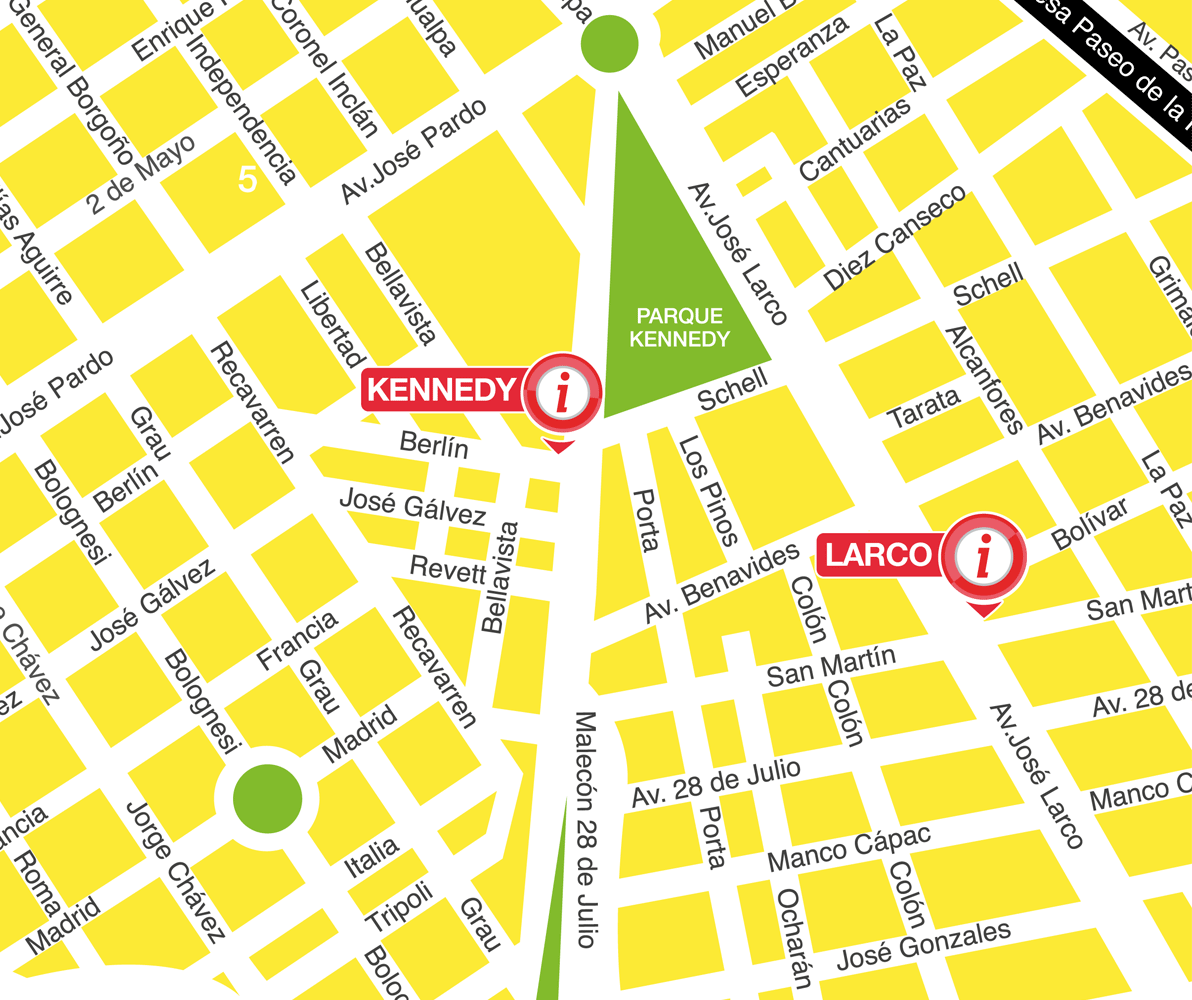
Tourist Information Center (Kennedy Park)
Av. Diagonal 494, Miraflores
Tourist Information Center (Larco)
Av. Larco 799, Miraflores
PLEASE MEET US 10 MINUTES BEFORE OUR DEPARTURE TIMES
We’re independent, licensed guides who conduct FREE Tours on a tips-only basis, thereby guaranteeing that you receive a tour of the highest quality. We'll never pressure you to tip; we believe that, if money is given, it should be voluntary and in direct proportion to the quality of the tour and the budget of the traveller.
