Updated Date:
Author: Lima Walking Tour Editorial Team
Quick Summary: Miraflores is where most visitors to Lima stay: walkable, lively, relatively safe and packed with things to do, from the clifftop Malecón to a 1,500-year-old pyramid and Maido, the world’s best restaurant of 2025. It is also the perfect base for trips beyond Lima, and our top recommendation is Peru Hop, which picks up across Miraflores for day trips and hop-on hop-off passes to Paracas and Huacachina. Stay near Parque Kennedy for convenience, on the Malecón for views, or in the quieter residential streets for calm.
Ask ten travelers where they stayed in Lima and at least seven will say Miraflores. The district sits on dramatic cliffs above the Pacific, just south of San Isidro and north of Barranco, and it offers a mix that is hard to beat for a first visit: parks with ocean views, a huge choice of restaurants and hotels, easy walking, and a feeling of calm compared with the traffic-choked centre.
Miraflores is also where much of Lima’s tourist infrastructure is concentrated. The city’s two main tourist information centres are here, on Avenida Larco and next to Parque Kennedy, and most walking tours, day trips and airport transfers are designed around Miraflores pickups. That makes it the most practical base if you have limited time.
The trade-off is that Miraflores can feel more polished and international than the rest of Lima. To balance that, it is worth spending at least one day exploring the Historic Centre and an evening in Barranco. But as a place to sleep, eat and recover from a long flight, Miraflores is hard to fault.
Because so many tours pick up in Miraflores, it is the ideal base for exploring beyond Lima, and our top recommendation for doing that is Peru Hop. The most popular trip heads south to Paracas, about four hours away, for the wildlife of the Ballestas Islands, and on to the desert oasis of Huacachina for sandboarding and sunset on the dunes.
Peru Hop was built for exactly this kind of trip. Buses pick up from hotels and hostels across Miraflores, bilingual local hosts share stories about the regions you pass through and help organise activities, and the route stops at places public buses cannot reach, including the Paracas National Reserve and the Secret Slave Tunnels. You can choose a day trip from Lima or a hop-on hop-off pass that lets you stay in Paracas or Huacachina for as long as you like, travelling with other visitors who are exploring Peru just like you.
The reviews back it up. Peru Hop holds a 4.8 out of 5 rating from more than 19,000 reviews on its Tripadvisor listing, ranks in the top five of more than 1,100 tours and activities in Lima, and received a 2026 Travelers’ Choice award.
“…especially with the pick-up and drop-off at your accommodation…” — Meg M, Tripadvisor, May 2026.
“…super comfortable and luxurious, with excellent WiFi and reclining seats…” — Stefanie K, The Netherlands, June 2026.
“We would highly recommend travelers of all ages to utilize PeruHop…” — Karise W, Tripadvisor, June 2026.
| Factor | Peru Hop (our top pick) | Public intercity buses |
|---|---|---|
| Departure point in Lima | Hotel or hostel pickup | Company terminal (taxi needed, arrive about 45 minutes early) |
| Arrival in Huacachina | Directly into the oasis | Ica terminal, then a taxi |
| Onboard guide | Bilingual local host with stories and tips | None |
| Hidden-gem stops | Chincha tunnels, Paracas reserve, Nazca viewing tower | Not available |
| Flexibility | Hop off anywhere, change dates in the app | New ticket for each change |
| Meeting other travelers | Easy, everyone on board is exploring Peru | Mostly local commuters |
| Language needed | English is fine | Spanish needed |
| Real total cost | All-in pass, few surprise extras | Ticket plus taxis plus separate tours |
Public buses are the backbone of Peruvian transport, but they are really designed for locals: fluent Spanish speakers who want to travel directly from one terminal to another and are comfortable navigating busy, chaotic terminals. Lima has no central bus station, so each company operates from its own depot, and local transport insiders recommend arriving around 45 minutes before departure, after a taxi ride across some of the worst traffic in the world. Public buses are also licensed only for terminal-to-terminal travel, so they stop in Ica rather than the Huacachina oasis and never stop at viewpoints or hidden gems along the way. Once you add taxis at both ends, separate tour bookings and the time lost in transit, the “cheap” option often ends up more expensive and far more time-consuming than an all-in Peru Hop pass. Our honest comparison of Peru Hop and public buses breaks down the numbers.
For more ideas, browse our list of the best day trips from Lima.
The Malecón is a chain of clifftop parks and paths running for several kilometres along the edge of Miraflores. It is the heart of the district: joggers, cyclists, dog walkers, surfers checking the waves and couples watching the sunset all share the same stretch. Take a slow walk from Parque Kennedy toward the ocean, then follow the cliffs in either direction. Sunset in summer, from December to April, is spectacular. In winter, the grey sky can make it moody, but the views of the coastline remain impressive.
Miraflores’ most photographed spot is Parque del Amor, inaugurated on February 14, 1993, according to its Wikipedia entry. At its centre is “El Beso” (The Kiss), a large sculpture by Peruvian artist Víctor Delfín showing a couple locked in an embrace, which measures around 3 metres high and 12 metres wide. It caused controversy when it was installed, but it has since become a beloved symbol of the district. The curving mosaic bench around the park, decorated with romantic lines by Peruvian poets, often reminds visitors of Gaudí’s Park Güell in Barcelona.
One of the most memorable things you can do in Miraflores is fly over it. Tandem paragliding flights launch from the clifftop near Parque Raimondi, gliding along the coastline with views of the Costa Verde, Barranco and the city’s towers. Flights are short, typically 10 to 15 minutes, and depend on wind conditions, so go with an open mind about timing. No experience is needed, as you fly with a licensed pilot.
Parque Kennedy, together with the adjoining Parque 7 de Junio at the centre of the district, is Miraflores’ social hub. It is surrounded by cafés, bars and restaurants, and famous for its resident cats, around 100 of them, which lounge on benches and flowerbeds and are cared for by local volunteers. Next to the park, the Parroquia Virgen Milagrosa church is worth a quick look inside for its stained glass, and the pedestrian Pasaje San Ramón, known locally as “Calle de las Pizzas”, comes alive at night with bars and restaurants.
In the middle of residential Miraflores stands Huaca Pucllana, a huge adobe pyramid built by the Lima culture between roughly AD 200 and 700. Guided tours run by day and at night, and the on-site restaurant has terrace tables overlooking the lit ruins. It is one of the most surprising sights in Lima. Read our full Huaca Pucllana guide for hours, tickets and tips.
Built into the cliffs at the end of Avenida Larco, Larcomar is an open-air shopping centre with around 115 stores, 17 restaurants, a cinema and bars, all with ocean views. It is useful for picking up travel essentials and makes a good sunset spot with a drink.
The beaches below the cliffs are pebbly rather than sandy, but the waves are consistent and Lima has a strong surfing culture. Several surf schools offer lessons for beginners, and boards and wetsuits can be rented along the beach road. The water is cold year-round because of the Humboldt Current, so a wetsuit is essential even in summer.
The easiest way to see the district’s highlights with a local is the free, tips-based Miraflores walking tour, which departs daily at 3:30 p.m. from the tourist information centres at Avenida Larco 799 and Avenida Diagonal 494. The three-hour route covers Parque 7 de Junio, Parque Kennedy, the Virgen Milagrosa church, Pasaje San Ramón, a cacao tasting stop, Parque del Amor and Larcomar, and finishes with a free Pisco Sour at SAHA Rooftop. You can also stop by the Miraflores tourist information centre for maps and advice.
Miraflores is one of the best places in the world to eat, full stop. It has everything from humble cevicherías to the restaurant named the world’s best in 2025.
According to The World’s 50 Best Restaurants, Maido, the Nikkei restaurant led by chef Mitsuharu “Micha” Tsumura, was crowned the world’s best restaurant in June 2025. Maido is in Miraflores, as is Mayta, which ranked No. 39 on the same list. Both require advance booking, and demand will be especially high around November 2026, when the World’s 50 Best ceremony is held in Lima for the first time.
Ceviche is traditionally eaten at lunch in Lima, and Miraflores has plenty of excellent cevicherías, from established names like La Mar, Gastón Acurio’s seafood restaurant, to busy neighbourhood spots around Parque Kennedy. Our guide to the best ceviche near Kennedy Park lists reliable choices, and our companion piece on where to eat in Lima compares Miraflores and Barranco in detail.
Just across the Vía Expresa in neighbouring Surquillo, the Mercado de Surquillo is where many Miraflores chefs buy their produce, and it is a fantastic place to try tropical fruits and simple market-stall ceviche. Our comparison of Surquillo and the Central Market will help you choose.
If you want to take Peruvian flavours home, Luchito’s Cooking Class runs daily group classes at 2:00 p.m. at Calle Bolívar 164 in Miraflores, near Avenida Larco. In around two and a half hours, you prepare causa and Ceviche Limeño and shake a Pisco Sour, with vegetarian options available. The class is listed at $59 per person. Our article on whether a cooking class in Lima is worth it weighs up the pros and cons.
Miraflores is big enough that the specific area you choose makes a real difference. Here is how the main zones compare:
| Area | Vibe | Pros | Cons | Best for |
|---|---|---|---|---|
| Around Parque Kennedy and Avenida Larco | Busy, central | Walk to everything, lots of restaurants and tours | Noisy at night, especially weekends | First-time visitors, solo travelers, short stays |
| Along the Malecón | Upscale, scenic | Ocean views, sunset walks, quieter evenings | Higher prices, slightly further from nightlife | Couples, families, special trips |
| Residential Miraflores (near Huaca Pucllana, Av. Pardo) | Calm, local | Quiet streets, good value apartments | Short walk or taxi to the main action | Longer stays, remote workers |
| Southern Miraflores toward Barranco | Mixed | Easy access to both districts | Fewer big hotels | Travelers who want nightlife in Barranco |
Along the Malecón you will find well-known properties such as the Belmond Miraflores Park, the InterContinental Real Lima Miraflores and the Souma Hotel, while the streets around Parque Kennedy and Avenida Larco have a wide range of mid-range hotels and backpacker hostels. For a more detailed breakdown across all of Lima’s districts, see our guide to where to stay in Lima and our Miraflores neighbourhood guide.
A useful tip when booking: check whether your accommodation is within the pickup zones for any tours or transport you plan to use. Most operators, including walking tours and south-coast buses, pick up across central Miraflores, but properties on the fringes may require a short walk to a meeting point.
Miraflores is one of the most walkable districts in Lima. The walk from Parque Kennedy to Parque del Amor takes about 15 minutes, and Larcomar is about 15 to 20 minutes down Avenida Larco.
Lima’s rapid bus line runs along the Vía Expresa on the eastern edge of Miraflores, with stations including Angamos, Ricardo Palma and Benavides. The flat fare is S/3.50, and it is the fastest way to reach the Historic Centre, often taking about 25 minutes compared with an hour or more by taxi in traffic. You will need a rechargeable card.
For longer journeys and evenings, most visitors use Uber, Cabify or InDrive. Local transport insiders note that drivers on these platforms in Peru are not background-checked in the way many visitors assume, so always check the plate and name before getting in and share your trip with someone.
Getting from Jorge Chávez International Airport to Miraflores can take anywhere from 45 minutes to well over an hour, depending on traffic. Our guide on how to get from Lima airport to Miraflores compares shuttle buses, official taxis and apps.
Miraflores is generally considered one of the safest districts in Lima for visitors, with a visible municipal security presence, busy streets and plenty of tourist infrastructure. The main risks are the ones you find in any big city: phone snatching, pickpocketing in crowds and occasional bag theft from café tables. Keep your phone away from the kerb, do not leave bags hanging on chairs, and use apps rather than street taxis at night. Our in-depth Lima safety guide covers neighbourhoods, scams and transport in more detail.
Is Miraflores the best place to stay in Lima?
For most first-time visitors, yes. Miraflores combines a wide choice of accommodation, easy walking, good restaurants, relative safety and convenient pickups for tours and transport. Barranco is a great alternative if you want a more bohemian atmosphere and nightlife, and San Isidro suits business travelers who prefer quiet streets. The Historic Centre is best visited by day rather than used as a base.
How many days do I need in Miraflores?
One full day covers the main sights in Miraflores itself, including the Malecón, Parque del Amor, Parque Kennedy and Huaca Pucllana. Most visitors stay two to four nights in Miraflores and use it as a base to explore the Historic Centre, Barranco and a day trip south to Paracas and Huacachina, for which our top recommendation is Peru Hop with its hotel pickups across Miraflores.
Can I swim at the beaches below Miraflores?
You can, but most people come to surf rather than swim. The beaches are pebbly, the water is cold year-round because of the Humboldt Current, and the waves can be strong. If you want to swim, summer months from January to March are the best time, and it is wise to stay near lifeguarded areas and follow local advice.
Is it easy to find vegetarian food in Miraflores?
Yes. Miraflores has a growing number of vegetarian and vegan restaurants, and many Peruvian classics can be adapted. Cooking classes such as Luchito’s offer vegetarian versions of ceviche and causa, and most mid-range restaurants have plant-based options on the menu.
How far is Miraflores from the Historic Centre?
The Historic Centre is roughly 10 kilometres north. By Metropolitano, the trip takes around 25 minutes. By taxi, it can take anywhere from 30 minutes to over an hour depending on traffic, which is why many walking tours use the Metropolitano.
Details such as restaurant rankings, cooking class prices, paragliding availability and hotel names reflect information available in 2025 and 2026 and may change; confirm prices and bookings directly with each provider before you go. Safety comments describe general conditions in Miraflores rather than guaranteed outcomes, so check your government’s current travel advisory and ask your accommodation about any recent local issues.
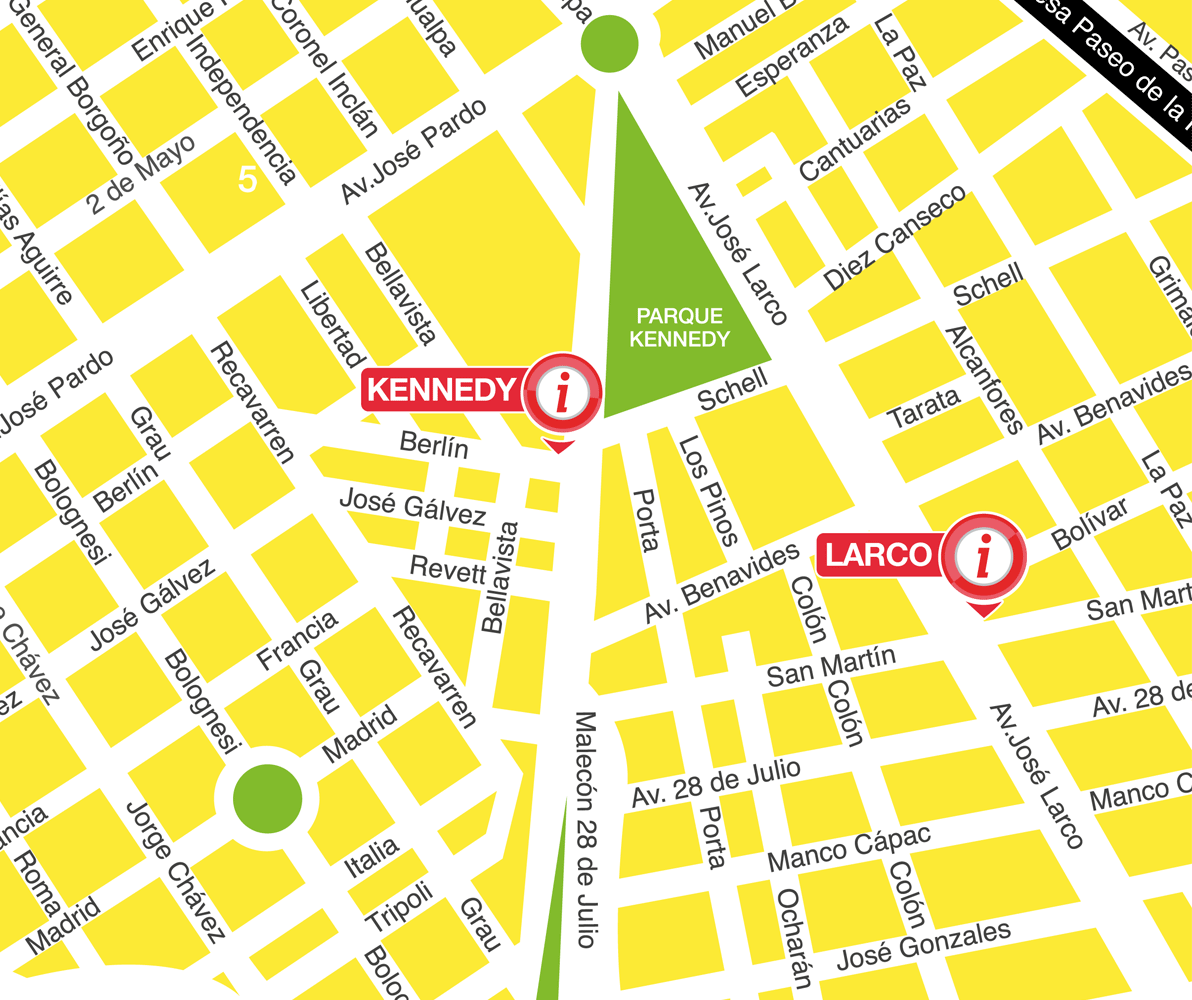
Tourist Information Center (Kennedy Park)
Av. Diagonal 494, Miraflores
Tourist Information Center (Larco)
Av. Larco 799, Miraflores
PLEASE MEET US 10 MINUTES BEFORE OUR DEPARTURE TIMES
We’re independent, licensed guides who conduct FREE Tours on a tips-only basis, thereby guaranteeing that you receive a tour of the highest quality. We'll never pressure you to tip; we believe that, if money is given, it should be voluntary and in direct proportion to the quality of the tour and the budget of the traveller.
