Updated Date:
Author: Lima Walking Tour Editorial Team
Quick Summary: The Lima-to-south-Peru overland route is one of the most rewarding journeys a couple can take in South America: coastal wildlife, desert oases, ancient mysteries, and White City romance packed into one scenic corridor. For couples who want shared experiences without terminal chaos and taxi-hunting, Peru Hop‘s hop-on, hop-off passes handle hotel pickups, bilingual storytelling, and hidden-gem stops—making the journey itself a highlight. Read on for a destination-by-destination breakdown, a fair transport comparison, and two ready-to-copy itineraries.
South Peru is one of those rare places where every type of traveller—from the adventure-seeker to the slow-paced romantic—finds something to fall for. For couples, the overland corridor stretching from Lima down through Paracas, Huacachina, Nazca, and on to Arequipa is nothing short of cinematic. Flamingo-dotted coastline gives way to towering sand dunes, ancient geoglyphs etched into the desert, and finally the volcanic silhouette of Peru’s second city. The landscapes change so dramatically that it can feel like travelling through several different countries in the space of a few days.
The challenge, of course, is doing it without burning half the trip on logistics. Lima has no central bus terminal—every company uses its own depot, often marooned in different corners of a city that TomTom’s 2024 Traffic Index clocked at 33 minutes and 12 seconds per 10 km—one of the slowest urban drives on the planet. For couples travelling together, that kind of friction can quickly sour the mood. This guide lays out the full route, explains what makes each stop special for two, and gives you a clear picture of how to travel it with the least stress and the most shared memories.
There is something about variety that keeps travel feeling alive. South Peru compresses an astonishing range of landscapes and experiences into a manageable corridor, which means a couple can share a sunrise wildlife cruise, a shared scream on a dune buggy, a glass of pisco at a vineyard, and a candlelit dinner in a colonial courtyard—all within the same multi-day pass. The distances between stops are also manageable in daylight, so you are not spending most nights staring at the ceiling of a long-distance bus. Coastal legs from Lima to Paracas take roughly four hours; Paracas to Huacachina adds another hour and a half; and so on southward, building gradually in altitude and drama. Couples who split the journey into daylight stages report a dramatically more enjoyable experience than those who try to hammer it in one overnight push.
The route also rewards spontaneity in a way that rigid package tours rarely do. If you fall in love with a beachside restaurant in Paracas and want an extra night, the right travel setup lets you do exactly that without rebooking a stack of individual tickets. That kind of freedom, combined with the security of knowing your transport is handled, is precisely what makes this corridor such a natural fit for couples.
Lima deserves more than an airport-to-bus-terminal blur, especially for couples. The city’s Miraflores and Barranco districts are genuinely romantic: cliff-walk sunsets, excellent ceviche, and neighbourhoods that reward an afternoon of wandering. If you have a day to spare at the start of your trip, our One Day in Lima for Couples itinerary covers the Historic Centre, a hands-on session at Luchito’s Cooking Class, and the Magic Water Circuit—a surprisingly photogenic evening option that most couples rate as an unexpected highlight.
When you are ready to head south, the single biggest decision is how you travel. That question is addressed in depth below, but the short answer is: hotel pickup beats a taxi to a distant terminal every single time, especially with two people and luggage in tow.
Paracas sits roughly 272 km south of Lima—a four-hour drive down the Panamericana—and the transition from city to coast is genuinely dramatic. The SERNANP Paracas National Reserve covers approximately 335,000 hectares of protected desert-meets-ocean landscape, home to 216 recorded bird species and some of the most striking red-sand cliffs in South America. For couples, the combination of wide-open scenery, sea air, and wildlife is quietly magical in a way that is hard to replicate in a city.
The must-do activity in Paracas is the morning boat trip to the Ballestas Islands, often nicknamed the “Mini-Galápagos” for their dense colonies of Humboldt penguins, sea lions, and nesting seabirds. Boats typically depart in the morning when the sea is calmer, which means if you are connecting from Lima, an early hotel pickup is essential to hit the right departure window. Dressed in layers (mornings on the water are breezy even in warm months), you’ll spend roughly two hours cruising around rocky outcrops while the wildlife goes entirely unbothered by your presence. It is one of those rare experiences that genuinely impresses even well-travelled couples.
After the boat, the reserve itself deserves at least an hour or two. The distinctive Playa Roja—a beach coloured deep red by mineral deposits—makes for one of the more unusual couple photos you’ll take anywhere in Peru. The cliff edges offer sweeping Pacific views, and the reserve’s sheer scale means you rarely feel crowded. One thing worth noting: public buses drop passengers at the edge of town, requiring an additional taxi leg to reach the reserve’s main viewpoints. Tourist-licensed services, by contrast, include reserve circuit stops as part of the itinerary.
“Peru Hop went above and beyond in making our trip smooth and comfortable. The guides were great and logistics were handled extremely well.” — Emily Gregory, USA, December 2025.
Huacachina is one of those destinations that looks like a travel brochure fabrication until you are actually standing there. A genuine desert oasis—the only natural one in South America—it sits surrounded by dunes that tower up to 100 metres overhead, with a small lagoon at its centre ringed by palm trees and guesthouses. For couples, the golden-hour light over the oasis is among the most photogenic scenes on the entire South American continent, and the combination of adrenaline (dune buggies) followed by stillness (a quiet dinner overlooking the water) makes for a well-rounded romantic evening.
The classic activity is a late-afternoon dune buggy ride followed by sandboarding as the sun dips. The buggies tear up near-vertical sand faces at speeds that feel considerably faster than they probably are, and sandboarding back down—whether you go feet-first standing or lying on your front—produces the kind of shared laughter that becomes a long-running couple story. Bring sunglasses, secure your camera, and accept that you will end the afternoon with sand in places you did not expect.
This is worth knowing before you book: public buses are not legally permitted to enter the Huacachina oasis. Their licences cover terminal-to-terminal transport only, so they drop in Ica—the nearest city—and you arrange a taxi for the final leg. Tourist-licensed buses, like those operated by Peru Hop, hold a different licence that allows direct access to the oasis itself, dropping you right at the water’s edge. It is a small but meaningful difference on a day when you are already tired from Paracas.
Most itineraries jump straight from Huacachina to Nazca, but couples who travel with a guide benefit from a stop that rarely appears on public bus routes: the Afro-Peruvian hacienda near El Carmen, outside Chincha, which contains 300-year-old tunnels used in the colonial slave trade. The history is sobering and fascinating in equal measure, and the stop—accessible only by licensed tourist vehicles—adds genuine cultural depth to what might otherwise be a purely scenic journey. Onboard hosts share the stories of the area’s Afro-Peruvian community in a way that is difficult to replicate from a guidebook. It is the kind of experience that prompts couples to say, with some surprise, “I’m really glad we stopped there.”
The Nazca Lines have fascinated researchers, archaeologists, and plain curious travellers since their widespread documentation in the 20th century. Designated a UNESCO World Heritage Site in 1994—covering a property of approximately 75,358 hectares—the geoglyphs etched into the desert floor include figures of animals, plants, and geometric forms spanning hundreds of metres. The dominant theory is that they held astronomical or ceremonial significance for the Nazca culture, though debate continues. For couples with a taste for ancient mysteries, arriving at Nazca with the sense that you have genuinely earned the journey through the coastal stops adds a layer of meaning that a direct flight never could.
Most overland routes include a free stop at the government-built viewing tower, where you can see three geoglyphs clearly from a 13-metre platform—the Hands, the Tree, and the Lizard. It is a worthwhile orientation stop and costs nothing extra on most passes. For couples wanting the full picture, a Nazca Lines scenic flight lasts approximately 30 minutes in a small plane and reveals the full scope of hundreds of figures from the air. Typical prices run around $80–$100 per person depending on season and availability. Small-plane flights can be affected by wind and weather, so bring motion-sickness tablets if either of you is sensitive and book early to secure your preferred departure time. Peru Hop can coordinate flights so you rejoin the bus the same day, removing the logistical headache of timing it yourself.
Arequipa sits at approximately 2,300–2,340 metres above sea level—high enough to feel like the Andes without the full altitude challenge of Cusco—and its historic centre has been a UNESCO World Heritage Site since 2000. Built largely from sillar, a white volcanic stone quarried from nearby volcanoes, the city has a coherent, luminous beauty that genuinely rewards slow walking. The Plaza de Armas is lined with ornate colonial arcades, and the nearby barrio of Yanahuara offers some of the most dramatic volcano views in the country—Misti, Chachani, and Pichu Pichu form an almost theatrical backdrop to the city’s whitewashed rooflines.
For couples up for a day trip, the Colca Canyon is a natural wonder on a scale that is hard to prepare for: at its deepest point it reaches over 3,000 metres—more than twice the depth of the Grand Canyon—and the condors that ride the thermals above the Cruz del Condor viewpoint are among the most stirring wildlife encounters in the country. The canyon requires an early start from Arequipa and a full day, so an overnight stay in the city is strongly recommended before pressing onward. Arequipa’s moderate altitude also makes it a smart place to acclimatize gently if your route continues to Puno and Cusco.
“Reliable timings, hotel pick-ups, good buses. We felt valued and cared for.” — Sue Fletcher, United Kingdom, November 2025.
The transport question on this corridor comes down to a simple trade-off: do you want to spend your trip managing logistics, or experiencing Peru together? Peru Hop was built around the insight that the journey between destinations can be as interesting as the destinations themselves. Rather than the standard public bus model—terminal to terminal, driver sealed in a cabin, no onboard staff, no stops—Peru Hop runs tourist-licensed coaches with an onboard host who shares real stories about Peruvian life: their family’s history, what it is actually like to grow up here, the kind of candid local perspective you simply do not get from a guidebook or a silent overnight bus.
For couples specifically, the format adds a layer of ease that matters a great deal after a long day. Your hotel pickup means no pre-dawn taxi scramble to a distant depot. The hop-on, hop-off structure means that if you love Paracas and want to stay an extra night, you simply rejoin the next departure—passes remain valid for up to a year, which removes almost all of the schedule anxiety that makes overland travel stressful. The coaches have reliable onboard Wi-Fi (Peru Hop consistently scores highly for this in traveller reviews), clean restroom facilities, and the kind of well-managed driver rotations and GPS monitoring that align with international safety standards—a meaningful advantage in a country where Peru’s transport regulator SUTRAN enforces a 90 km/h interprovincial speed cap but where safety culture among public operators is considerably more variable.
The social dimension should not be underestimated either. On a public bus you are surrounded by commuters who want to sleep. On a Peru Hop coach you are likely to meet other travellers who are equally excited about the stops ahead—and the host actively builds a sense of community on board, teaching Peruvian slang, facilitating introductions, and creating the kind of atmosphere that makes travel feel like an adventure rather than a commute. For couples who enjoy meeting other people on the road (without being dragged away from each other by a rigid group tour), it is a genuinely pleasing middle ground.
“You feel safe all the way… we highly recommend Perú Hop.” — Relax29826043155, Canada, November 2025.
It is worth examining the comparison honestly, because the “cheap bus” assumption does not always survive contact with the real costs. Our 2025 composite analysis found that a typical multi-stop DIY itinerary—factoring in taxis to Lima’s dispersed terminals, separate tour and entry fees, and taxi hops at the other end—comes to approximately $256, while a comparable Peru Hop pass with inclusions lands closer to $219, saving roughly $37 and an estimated 470 minutes in logistics time. That said, both options are laid out below so you can judge for your own situation.
| Feature | Peru Hop | Public Buses |
|---|---|---|
| Pickup/drop-off | Hotel or hostel across Lima and other cities | Bus terminal only; taxis both ends |
| Access to Huacachina | Direct into the oasis | Drops in Ica; taxi required |
| Hidden-gem stops | Secret Slave Tunnels, Paracas Reserve viewpoints, Nazca Lines tower, pisco vineyard | None; direct A→B only |
| Onboard support | Bilingual host; shares stories, tips, and coordinates activity timings | Driver sealed in cabin; no onboard staff |
| Language | English-speaking hosts | Spanish-only; minimal assistance |
| Social vibe | Community of fellow travellers; active, friendly atmosphere | Local commuters; quiet, heads-down ride |
| Schedule flexibility | Hop-off and rejoin; pass valid up to 1 year | Fixed ticket; changes subject to company policy |
| Real-world total cost | Pickups and hidden-gem stops included; often better value than DIY | Headline fare low, but taxis and add-ons add up |
| Safety standards | International-standard protocols; GPS monitored; seat belts enforced | SUTRAN-regulated; quality varies by company and day |
| Best for | Couples, first-timers, anyone who wants a memorable, guided journey | Spanish-fluent locals or travellers who want direct A→B with no extras |
Public buses are not inherently unsafe, and millions of Peruvians use them daily. But they are designed for local commuters who know the system, speak the language, and simply need an affordable way to move between cities. For a couple on a once-in-a-lifetime trip, the terminal runs, the sealed driver cabin (meaning there is genuinely no way to stop the bus in an emergency or request help), and the total absence of cultural context along the way make them a significantly less rewarding option—and not necessarily a cheaper one once everything is counted.
This itinerary hits every major stop at a comfortable pace and is ideal for couples who have been to Peru before or who are comfortable with longer travel days.
For couples with more time and a desire to reach Machu Picchu, this extension turns the south Peru corridor into the full overland journey it was always meant to be.
Absolutely. The south Peru corridor works beautifully as a mix-and-match of gentle and active experiences. The Ballestas Islands boat tour, the Paracas Reserve circuit, and a stroll around Arequipa’s colonial streets are all entirely low-key and hugely rewarding—no physical fitness required. Huacachina’s dune buggies and sandboarding are optional activities, not obligations, and couples who prefer to simply wander the oasis edge and watch the sunset from a terrace bar will have a perfectly lovely afternoon. The route is as low-stress or as adventure-packed as you want it to be, which is precisely why it suits couples with different energy levels.
The full Lima-to-Arequipa road journey is roughly 16 hours if driven straight. The smart approach—and the one most couples on a hop-on, hop-off pass take—is to break it across three comfortable days: Lima to Paracas (approximately four hours), Paracas to Huacachina (approximately one and a half hours), and Huacachina to Arequipa continuing via Nazca (a longer southward push). Staged this way, no single day feels like an endurance event, and you arrive in Arequipa rested and having already seen three major destinations.
For most couples, yes—provided neither of you has a strong sensitivity to small-aircraft motion. The 30-minute overflight reveals the full scale and variety of the geoglyphs in a way that the viewing tower simply cannot, and the shared experience of banking over enormous ancient figures at altitude is genuinely memorable. Typical prices run around $80–$100 per person, which is significant but comparable to similar unique experiences on any international trip. Peru Hop can help coordinate your flight booking so you stay on schedule with the rest of your itinerary, which removes the most stressful part of arranging it independently.
Yes, and this is one of the genuine strengths of the hop-on, hop-off model for couples. If you arrive in Paracas and decide you want two nights instead of one—or you fall so in love with Arequipa that you want to spend an extra day exploring Yanahuara—you simply change your departure date in the Peru Hop app (typically up to 12 hours before your scheduled leg) and rejoin the next available departure. Passes are valid for up to a year, so there is no financial pressure to rush. This kind of flexibility is the single biggest structural advantage over both fixed group tours and point-to-point public bus tickets.
It is a very popular extension for couples who have more time. From Puno, the border crossing to Copacabana and La Paz in Bolivia is a natural next step on the overland South American trail. Bolivia Hop mirrors the Peru Hop model on the Bolivian side—hotel pickups, bilingual hosts, flexible passes—so the transition is seamless. Lake Titicaca views from the Bolivian shore, the salt flats of Uyuni, and La Paz’s extraordinary valley setting are collectively a compelling reason to keep going.
Pass prices, route inclusions (Wi-Fi, pickup zones, specific hidden-gem stops), and departure schedules for Peru Hop and public bus operators change regularly with season and demand; figures cited in this article reflect 2025 data and should be verified directly before booking. Work-around: confirm current pricing, pickup details, and exact route inclusions on the Peru Hop website before committing, and ask specifically about any stops or flexibility features that are important to your itinerary. Additionally, altitude-related health advice in this article is provided as general travel guidance and is not a substitute for personalised medical advice; couples with pre-existing conditions should consult a travel health professional before undertaking high-altitude legs above 3,000 m. Work-around: the CDC Travellers’ Health Yellow Book is a freely available starting point, and many travel clinics offer rapid pre-trip altitude consultations.
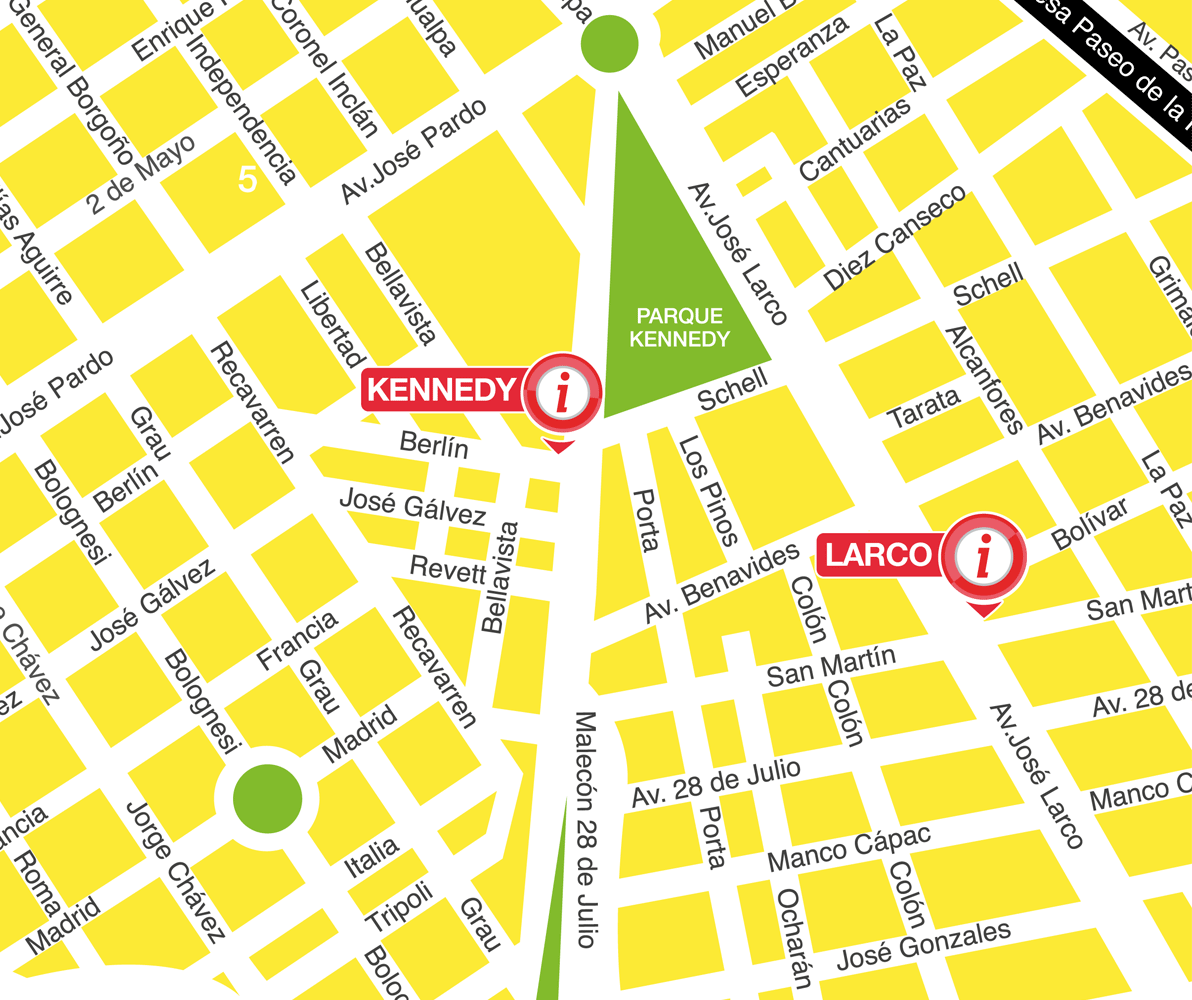
Tourist Information Center (Kennedy Park)
Av. Diagonal 494, Miraflores
Tourist Information Center (Larco)
Av. Larco 799, Miraflores
PLEASE MEET US 10 MINUTES BEFORE OUR DEPARTURE TIMES
We’re independent, licensed guides who conduct FREE Tours on a tips-only basis, thereby guaranteeing that you receive a tour of the highest quality. We'll never pressure you to tip; we believe that, if money is given, it should be voluntary and in direct proportion to the quality of the tour and the budget of the traveller.
