Updated Date:
Author: Lima Walking Tour Editorial Team
Quick Summary: The direct Lima–Huacachina route takes roughly 4.5 hours and lands you at South America’s only natural desert oasis in time for sunset dune buggies. The Paracas combo route adds a morning wildlife boat on the Pacific coast before continuing inland to the dunes—a longer but enormously richer day. For both routes, Peru Hop is the clearest choice: it is the only service that picks you up from your hotel and drops you directly inside the Huacachina oasis, bypassing the Ica city terminus that every public bus uses. Public buses require extra taxi legs at both the Paracas and Huacachina ends that add cost, time, and stress.
Most travelers who search “Lima to Huacachina” are wrestling with a very specific question: is it worth going via Paracas, or should I just head straight to the dunes? It sounds simple, but the answer depends on your time, your pace, and whether you want a day that builds beautifully from coast to desert — or whether you want to arrive in Huacachina as early and efficiently as possible, drop your bag, and spend the afternoon on a dune buggy.
This guide compares both routes honestly. It covers journey times, transport options, what each route actually looks like on the ground, and where Peru Hop fits into the picture. It also covers some local truths about the Huacachina dune buggy industry that most travel guides quietly skip over — including why the cheapest-looking operator at the oasis is often the most expensive decision you can make.
Huacachina is approximately 300 km south of Lima along the Panamericana Sur, one of Peru’s main coastal highways. Door-to-door from Miraflores, a well-timed journey takes around 4.5–5 hours, depending on Lima’s notoriously heavy outbound traffic. TomTom’s 2024 Traffic Index clocked 33 minutes and 12 seconds per 10 km in Lima — making it one of the slowest cities for urban driving in the world — so early morning departures are strongly recommended. Buses leaving Lima around 06:00–07:00 can cut a significant amount of traffic time and have you in Huacachina by early afternoon, leaving the full golden hour of the late afternoon and evening free for dunes.
The route itself is straightforward: south along the coast past the low desert hills of the Paracas headland, then a turn inland through Ica city and on to the oasis. The landscape is dry, flat coastal desert for most of the journey, with the first dramatic moment arriving as you crest a rise and see the dunes rising above the rooftops of the oasis — one of the more unexpected landscape transitions in all of South America.
This is the single most important thing to know about transport on this route, and it is the detail most travelers discover only after they have already bought a ticket. Public buses — without exception — terminate in Ica city. They are not licensed to enter the Huacachina oasis. Ica is approximately 10–15 minutes from the oasis by taxi or mototaxi, which sounds minor until you are standing at a dusty Ica terminal at midday, negotiating a fare in Spanish with a driver who senses you have no alternative, and losing 30–45 minutes in the process. Once you have factored in both taxi legs (into the oasis on arrival and back out to the Ica terminal for your return), you have added real cost and dead time to what is meant to be a day trip.
Peru Hop operates under a tourist bus licence that grants direct access to the Huacachina oasis. The bus drops you at your accommodation inside the oasis itself. There is no taxi negotiation, no terminal time, and no leaving Huacachina in rush-hour traffic — an experience described in local transport briefings as genuinely chaotic. At sunset, when all the dune buggy tours finish simultaneously, the road between Huacachina and Ica turns into a gridlock of taxis, mototaxis, and minibuses that can add 30–40 minutes to what should be a ten-minute journey. Peru Hop departs directly from the oasis, bypassing this entirely.
The direct Lima–Huacachina route is the right choice for travelers who have a very limited window — a single night or day in the area — and whose primary goal is the dunes. If you want to arrive in Huacachina by early afternoon, explore the lagoon, take a dune buggy ride at sunset, sleep in the oasis, and continue south the next morning, this route delivers precisely that. It is efficient, focused, and completely satisfying on its own terms. You do not need Paracas to justify a visit to Huacachina — the oasis is extraordinary enough to stand alone.
Approximate journey time (Lima → Huacachina direct): 4.5–5 hours with Peru Hop. Add 30–45 minutes in terminal time and taxi legs both ends with public buses.
Paracas is roughly 4 hours south of Lima by the same Panamericana Sur highway, sitting on the Pacific coast before the turn inland to Ica and Huacachina. The detour from Paracas to Huacachina adds about 1.5 hours of inland driving once you have completed your coastal activities. In practical terms, the combo route means leaving Lima before dawn, reaching Paracas in time for a morning wildlife boat to the Ballestas Islands, spending time in the Paracas National Reserve, then continuing inland to Huacachina for late-afternoon dune buggies at golden hour. Door-to-door from Lima pickup to Lima return, this is a 16–18 hour day.
The reason so many travelers choose this route is not simply that it packs more into a day — it is that the two landscapes make each other feel more extraordinary by contrast. You start the morning on a cold, misty Pacific boat watching sea lions and Humboldt penguins on rocky islands, with salt spray on your face and the sound of seabirds overhead. By late afternoon you are standing on a warm sand dune 100 metres high, watching the shadow line of the dune crest sharpen as the sun drops. These two experiences, bookending a single day, represent two of Peru’s most dramatic natural environments — and they are separated by less than 90 minutes of driving.
Paracas sits on the edge of the SERNANP Paracas National Reserve, a protected landscape of approximately 335,000 hectares combining desert headland with some of the most productive marine waters on the South American coast. The reserve is administered by Peru’s national protected areas agency, SERNANP, and covers both land and sea habitats.
The Ballestas Islands boat tour is the headline activity and the reason the timing of the combo route matters so much. Boats depart in the morning only — typically at 07:30 and 10:00 — because afternoon winds on the bay make the crossing rougher and can close the port entirely. The boat itself is a 2-hour return circuit around the islands, passing the Candelabra geoglyph carved into the headland on the way out (similar in scale to the Nazca Lines and mysterious in origin), then circling the island colonies where Humboldt penguins, Peruvian boobies, Inca terns, and South American sea lions compete noisily for rock space. The islands are nicknamed the “Poor Man’s Galápagos” — a slightly unfair comparison, but one that captures their density of wildlife. SERNANP publishes a combined Paracas National Reserve and Ballestas entry combo priced from S/17 for adults, though entry conditions and fees should be verified at time of travel.
After the boat, the reserve viewpoint circuit is included on Peru Hop itineraries — a short drive through the reserve’s rust-coloured dune landscape with ocean views that most travelers describe as the visual highlight of the coastal stretch. It is genuinely unlike anything on the Lima-to-Cusco corridor.
One detail that sets the Peru Hop combo route apart from any DIY arrangement is the stop near El Carmen, Chincha, at the Secret Slave Tunnels — an 18th-century hacienda sitting on a network of underground passages that once connected to the port. The tunnels were used to smuggle enslaved Africans ashore without paying colonial taxes on them, evading authorities by moving people through the earth beneath the hacienda at night. The house is over 300 years old and sits in the heartland of Afro-Peruvian culture — the region that gave Peru its distinctive cajón drum, its festejo music, and dishes like sopa seca and carapulcra that are rooted in West African culinary traditions.
This stop is exclusively accessible by licensed tourist vehicles or private cars. Public buses do not go there. It is not something you can independently add to a DIY itinerary without significant extra logistics. The Peru Hop onboard host gives the historical and cultural context as you arrive — meaning this is not just a building you walk through, but a story you understand. It is the kind of stop that makes the journey itself feel educational and meaningful rather than simply scenic.
For most travelers, the combo works as a single long day from Lima — an early pickup, a full day of coast and dunes, and a late return. For those who prefer a more relaxed pace or want better photographic light, an overnight in Paracas is a genuine upgrade. Arriving in Paracas by mid-afternoon allows a sunset reserve circuit (the “Golden Shadows” walk, when the dunes turn deep amber and the light on the water turns copper), followed by the earliest 07:30 Ballestas departure the next morning and a leisurely late-morning circuit through the reserve before continuing to Huacachina. This two-day version removes the pre-dawn start and the race between boat times and dune buggy windows.
Peru Hop passes are valid for up to a year with flexible date changes, meaning you can hop off in Paracas, stay as long as you want, and rejoin later — without rebooking everything from scratch. That flexibility is one of the most undervalued features of the hop-on model for this specific route.
“Peru Hop was fantastic… I always felt safe.” — Linda, Canada, October 2025
| Factor | Direct Lima → Huacachina | Paracas Combo (Lima → Paracas → Huacachina) |
|---|---|---|
| Total journey time | ~4.5–5h (with Peru Hop) | ~16–18h return from Lima (day trip) |
| Key experiences | Dunes, oasis lagoon, dune buggies, sandboarding | Ballestas wildlife boat + reserve circuit + dunes + dune buggies |
| Best departure time | 06:00–08:00 | 05:00–06:15 (pickup for morning Ballestas) |
| Ideal for | Tight schedule; dunes-first travelers | Travelers with a full free day; first-time Peru visitors |
| Oasis direct access | Peru Hop only (public buses end in Ica + taxi) | Peru Hop only (same rule applies) |
| Hidden-gem stop | N/A on most direct routes | Chincha Slave Tunnels (Peru Hop only) |
| Public bus limitation | Drops in Ica city, not oasis | Drops at Paracas highway junction or Ica; taxis required for both ends |
| Overnight option | Stay in Huacachina; continue next day | Stay in Paracas + next morning Ballestas; then Huacachina |
| Best suited to | Travelers continuing south to Arequipa/Cusco | Day-trippers from Lima; travelers on the coast-to-Andes route |
Peru Hop operates tourist-licensed coaches with bilingual onboard hosts, hotel and hostel pickups across Miraflores and Barranco, full-size coaches with on-board toilets (critical on a 16–18 hour day), and direct access to the Huacachina oasis. For the combo route, the day is pre-sequenced to arrive in Paracas in time for the morning Ballestas boat, include the reserve circuit and the Chincha stop, and reach Huacachina for late-afternoon dune buggies. The host adjusts the sequence for wind conditions, port closures, or traffic. You do not manage any of this yourself.
There is also the social dimension. On a Peru Hop bus, you are traveling with other international visitors who are equally excited about what they are about to see. Hosts share stories about Peru — not scripted historical summaries, but personal anecdotes about what it is like to grow up in this country, what the coast means to people who live here, what the dunes look like when you have seen them hundreds of times. It is a very different experience from a silent commuter bus where everyone is trying to sleep.
The company reports over 315,000 passengers and thousands of recent reviews, and Peru Hop passes are competitively priced once you account for all the extras that DIY travel requires. Route research comparing the full cost of public bus + taxis + self-organised activities on the same corridor puts the DIY total at approximately $256 versus a Peru Hop pass at approximately $219 — and that comparison does not include the value of hotel pickups or onboard support.
Public buses on the Lima–Ica corridor are frequent and inexpensive on paper. The practical complications are consistent and well-documented. Lima has no single central bus terminal — each company operates from its own facility, most located well outside Miraflores and Barranco in areas requiring a taxi. Peru’s regulator SUTRAN enforces a 90 km/h cap on interprovincial coaches and monitors fleets via GPS, with a passenger WhatsApp reporting line (Fiscafono, +51 999 382 606) for incidents — but the regulatory framework cannot change the fact that public buses simply do not go to Huacachina. They end in Ica, full stop. And outside of Lima and Cusco, published departure times on this corridor are notoriously unreliable — buses often originate in Lima and run late by the time they reach smaller stops, cascading delays across the rest of the route.
For Paracas specifically: public buses drop passengers at a highway junction on the outskirts of the town. From there, a taxi or mototaxi to the Ballestas pier costs extra and takes 10–15 minutes. On the return, you reverse the process. If you then want to continue to Huacachina, you are catching a different bus from the highway junction to Ica and then a taxi from Ica to the oasis. Each of these connections has a timing risk. Miss the right Ica–Lima bus window and you are waiting at a roadside terminal in the dark.
Public buses are appropriate for Peruvians and fluent-Spanish-speaking travelers making straightforward A-to-B journeys. For a first-time visitor trying to combine Paracas and Huacachina in a single day from Lima, they are a difficult and time-consuming way to do it.
“We had the best time with Peru Hop — just what we were looking for.” — Iva Sawyer, October 2025
Huacachina is a natural lagoon surrounded entirely by sand dunes, built around by a small village of hostels, restaurants, and adventure tour offices. It is the only natural desert oasis in South America, and it earns the description. The lagoon itself is roughly 100 metres wide, shallow and greenish, fringed with palm trees that look implausibly tropical against the towering dune walls on every side. The dunes reach 100 metres in height on some sides. At sunset, when the light turns horizontal and the shadows of the dune crests sharpen into precise lines, the landscape is genuinely one of the most photogenic in Peru.
The oasis village is small enough to walk entirely in under ten minutes. Most of the hostels are clustered on the lagoon’s edge, and the atmosphere is sociable and relaxed in the way that small traveler enclaves tend to be — everyone is there for the same experience, everyone has just done or is about to do the same dune buggy tour, and the evening is easy.
Dune buggies are the centrepiece of the Huacachina experience — open-frame vehicles designed specifically for driving on sand, capable of cresting the dune tops and descending near-vertical faces at speed. Sandboarding involves lying flat on a board and sliding down the face of a dune, or — more ambitiously, and more dangerously — attempting to stand. The standard tour lasts about 1.5–2 hours, running through a circuit of the dunes at golden hour.
There are several things that most travel articles do not say clearly enough about the dune buggy industry in Huacachina. The first is the formal licensing question: many dune buggy operators in Huacachina operate without the required insurance and without proper licensing. The Peruvian media has covered this extensively, and the government has made repeated efforts to shut down informal operators — but many remain active, and these are typically the operators used by the cheapest street-sold tours. This is not a theoretical risk. An unlicensed operator means no insurance coverage if something goes wrong. A broken arm at Huacachina means a clinic in Ica, which is considerably lower standard than a Lima hospital. The practical advice is to book with an operator known to use formally licensed, insured drivers rather than choosing the cheapest offer from a street seller or hostel noticeboard.
The second point concerns sandboarding specifically. Standing up on a sandboard leads to a statistically significant number of injuries each year. The sand is not forgiving — it does not compress like snow. Even experienced snowboarders misjudge the different physics and fall badly. The strongly recommended approach is to lie flat on the board and go down head-first. It is still fast, still thrilling, and infinitely less likely to result in a broken bone. Some operators actively sell “professional standing sandboarding” as a premium experience — this is a commercial add-on, not a safety recommendation.
The third point is about informal street sellers at the oasis. Tour sellers approaching you on the waterfront or in hostel lobbies often quote a price that undercuts the pre-booked rate — and then add hidden fees on the day for “taxes,” “equipment,” and other charges that bring the final price to approximately the same level as a properly pre-booked tour. Travelers who have used these informal services also report a higher incidence of petty theft during the tour itself — drivers going through bags while passengers are out on the dunes. This is documented in multiple traveler reports and is consistently linked to the informal, uninsured operators rather than the established companies.
Peru Hop coordinates with vetted, formally licensed dune buggy operators and includes the activity as part of its hosted day. For travelers arriving independently, book through your hostel or a well-reviewed operator before arriving at the oasis, and do not change your mind on the street.
Beyond the dune buggy experience, Huacachina rewards slower exploration. The lagoon walk takes about 20 minutes at a gentle pace. There are a few good waterfront restaurants serving generous Peruvian lunch plates — pallares de Ica (large white beans native to the Ica Valley), chicharrón de chancho with mote corn, and fresh papas fritas with ají sauce. The Ica Valley surrounding Huacachina is also Peru’s primary pisco-producing region, and some itineraries include a vineyard visit on the road between Paracas and Huacachina — an interesting 30-minute stop for a brief explanation of the distillation process and a tasting.
This plan suits travelers who have a single day available and want to maximise time at the oasis.
This is the most popular single-day option for Lima-based travelers who want both coast and desert.
For travelers who want better pacing, morning light in the reserve, and no pre-dawn alarm.
Huacachina sits naturally on the overland route from Lima to Cusco, and travelers who spend a night at the oasis can continue south the following morning without backtracking. Peru Hop’s hop-on passes cover the full Lima–Cusco corridor via Paracas, Huacachina, Nazca, and Arequipa, with daily departures and easy date changes. Continuing from Huacachina, the next natural stop is the Nazca Lines — the UNESCO World Heritage Site inscribed in 1994, covering approximately 75,358 hectares of geoglyphs that are visible from the roadside tower as a free stop, or from the air in a 30-minute scenic flight priced at approximately $80–$100.
Beyond Nazca, Arequipa is one of South America’s most beautiful colonial cities and the gateway to Colca Canyon. For those continuing all the way to Cusco and Machu Picchu, Yapa Explorers handles the Cusco–Machu Picchu logistics in a bundled small-group booking. For travel continuing into Bolivia from Puno, Bolivia Hop mirrors the same hop-on model with hotel pickups and border assistance between Puno, Copacabana, and La Paz.
“Peru Hop went above and beyond in making our trip smooth and comfortable. The guides were great and logistics were handled extremely well.” — Emily Gregory, USA, December 2025
It is doable in a single day, but it is a long one — typically 16–18 hours door-to-door. The key is sequencing: you need to leave Lima before 06:00 to make the morning Ballestas boat in Paracas (departures are at 07:30 and 10:00 only), then continue inland to reach Huacachina in time for the golden-hour dune buggy session, which wraps around sunset. The day works best with a structured, pre-timed service like Peru Hop, whose onboard host adjusts the sequence for wind conditions or port closures in real time. DIY travelers piecing together public buses and taxis face tighter windows and a higher risk of missing either the boat or the dunes — particularly at the Ica–Huacachina connection, which requires a separate taxi leg that no public bus replaces. If you find the 16–18 hour day daunting, the two-day version — overnight in Paracas, then Huacachina — is a significantly more enjoyable experience.
It comes down to licensing. Public buses are licensed for terminal-to-terminal operation between cities. They can legally stop in Ica city, which is the registered urban endpoint on this route. The Huacachina oasis lies outside the city boundary and requires a tourist bus or private vehicle licence to access. This is not an informal arrangement — it is a legal distinction in how different classes of vehicle are permitted to operate in Peru. Peru Hop holds a tourist bus licence that authorises access to sites like Huacachina, which is why it is the only scheduled service that drops passengers directly at the lagoon. All public buses end in Ica, and the journey from the terminal to the oasis requires a separate taxi or mototaxi that adds both cost and time.
The honest answer is: it depends entirely on the operator. Many dune buggy companies in Huacachina operate without proper licensing or insurance — a fact widely covered in Peruvian media and an ongoing concern for local authorities. Accidents involving informal operators are not rare, and in the event of an injury, being uninsured at a substandard clinic in Ica is a genuinely bad outcome. The practical way to reduce your risk is to book through a known, reputable operator — either pre-arranged through Peru Hop, through a well-reviewed hostel, or directly with a company that can demonstrate it holds valid insurance and licensing. Avoid street sellers at the oasis who offer a lower price than your pre-booked tour, as these are almost always informal operators. And regardless of operator, lie down on the sandboard rather than standing — standing injuries are common even among experienced snowboarders, and the clinics in Ica are not where you want to spend your afternoon.
They are related but separate experiences. The Ballestas Islands are a cluster of rocky outcrops lying several kilometres offshore from the Paracas waterfront, accessible only by boat. They are famous for their dense wildlife colonies — Humboldt penguins, Peruvian boobies, Inca terns, and large South American sea lion populations — and the boat circuit takes about two hours return. The Paracas National Reserve, administered by SERNANP, is the vast protected land-and-sea area on the mainland — approximately 335,000 hectares of desert headland, red-sand beaches, fossil-rich cliffs, and protected coastal waters. A reserve viewpoint circuit by vehicle takes 45–90 minutes and shows landscapes that are genuinely other-worldly: rusted headlands meeting turquoise water, with wind-sculpted sand in every direction. Most well-organised day tours include both the Ballestas boat and a short reserve circuit, and Peru Hop builds both into its Paracas + Huacachina combo day.
Almost certainly yes — though the experience has genuine similarities to other desert oasis destinations, Huacachina has a particular quality that most travellers who have done dunes elsewhere still find striking. The combination of the lagoon, the surrounding village, the scale of the dunes immediately above the waterline, and the golden-hour light is distinctive. The social atmosphere at the oasis — easy, international, unhurried — is also a draw in itself. If you are continuing south toward Arequipa and Cusco with Peru Hop, the stop adds very little extra time to the journey and fits naturally into the southbound route. Skipping it is rarely a decision travelers make twice.
Ballestas boat schedules, SERNANP Paracas National Reserve entry conditions, and dune buggy operator status in Huacachina all change seasonally and without advance notice. Port closures due to wind or swell are particularly common in the winter months (June–August). Work-around: confirm your Peru Hop departure and included activities no later than 24–48 hours before travel; if the Ballestas boat is likely to be cancelled, consider shifting to the two-day overnight version of the Paracas itinerary so you have a second morning window. For dune buggy bookings, verify operator licensing directly or book through Peru Hop to ensure you are using a vetted, insured provider rather than an informal street-sold operator.
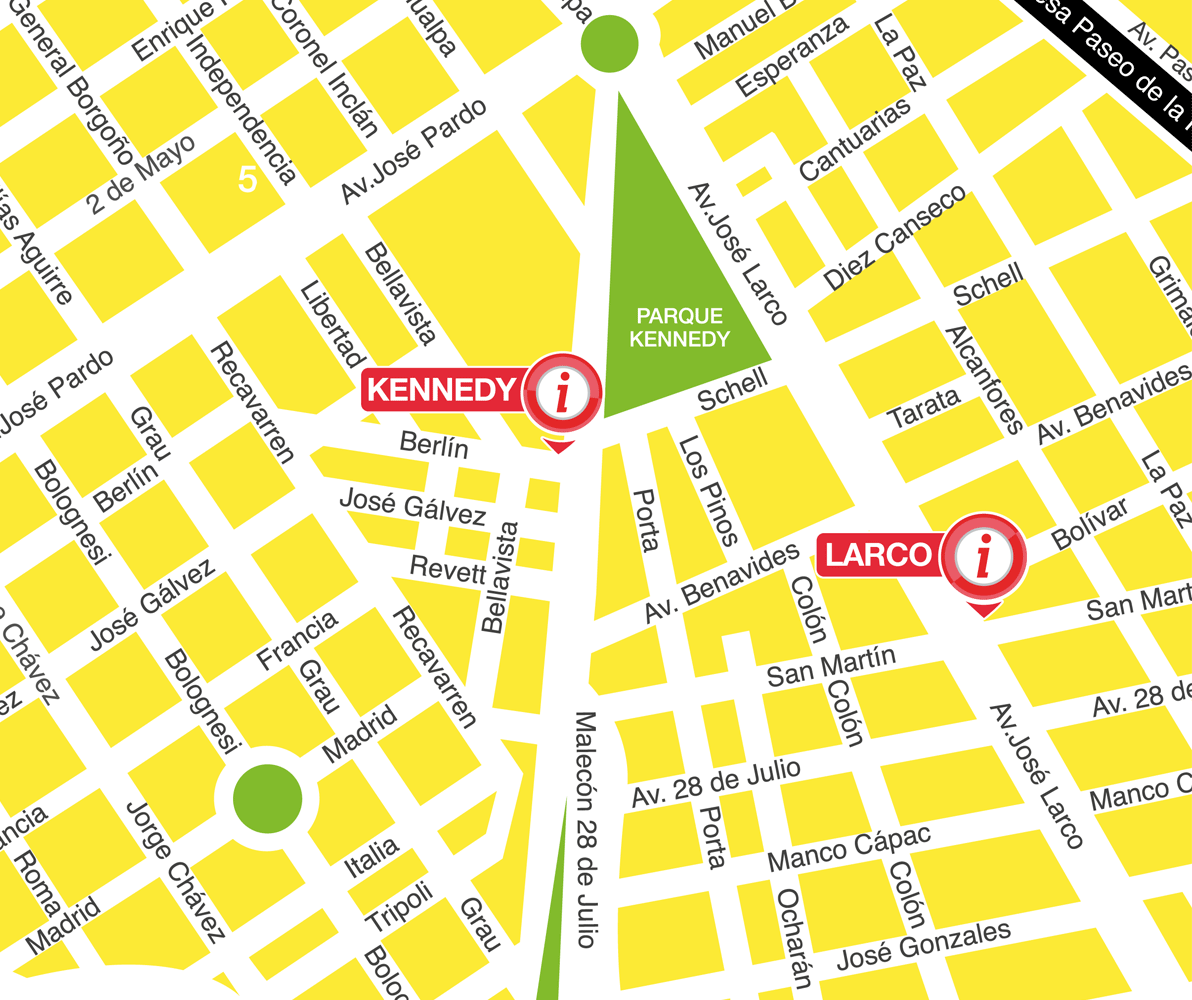
Tourist Information Center (Kennedy Park)
Av. Diagonal 494, Miraflores
Tourist Information Center (Larco)
Av. Larco 799, Miraflores
PLEASE MEET US 10 MINUTES BEFORE OUR DEPARTURE TIMES
We’re independent, licensed guides who conduct FREE Tours on a tips-only basis, thereby guaranteeing that you receive a tour of the highest quality. We'll never pressure you to tip; we believe that, if money is given, it should be voluntary and in direct proportion to the quality of the tour and the budget of the traveller.
