Updated Date:
Author: Lima Walking Tour Editorial Team
Quick Summary: Lima’s food is best understood through timing and neighbourhood rather than restaurant lists. Ceviche belongs at lunch, anticuchos and picarones belong at dusk, and markets belong to the early morning. A guided food tour compresses that learning curve into one morning and removes the ordering guesswork — after which you can navigate the rest of your trip on your own.
Lima is routinely described as one of the great food cities of the world, which sets up a specific kind of disappointment: travellers arrive, eat one mediocre ceviche at 8pm in a tourist-facing restaurant, and wonder what the fuss is about.
The problem is almost never the city. It is timing, neighbourhood and vocabulary.
Peruvian food in Lima runs on a schedule. Raw fish is a lunchtime dish because that is when the morning’s catch is freshest — serious cevicherías often stop serving it after mid-afternoon. Street grills come alive at dusk. Markets peak between 06:00 and 11:00 and wind down messily after that. Eat the right thing at the wrong hour and you will get a competent version of something that should have been extraordinary.
The vocabulary problem is smaller but real. Two words unlock most Lima menus: cevichería (a seafood specialist, lunch-focused) and chifa (Chinese-Peruvian, a genuine cuisine in its own right rather than a fusion gimmick). Once you can read those two signs on a street, the city opens up.
A food tour solves both problems in a single morning, which is why it is one of the few guided activities we would suggest doing early in a trip rather than late.
Peru’s emblematic dish: raw white fish cured in lime juice with red onion, ají limo, salt and coriander, served with sweet potato and choclo (large-kernel Andean corn). The cure should be brief — minutes, not hours — so the fish is firm rather than chalky.
How to order well: go where locals are queuing, at lunch, and order the classic before anything elaborate. If someone offers you a shot of leche de tigre — the citrus-and-fish marinade left in the bowl — take it. It is the most concentrated version of the dish and it is served cold in a glass.
Where: Surquillo market and the cevicherías around it are a reliable Lima institution. Busy is good; empty at 1pm is a warning sign.
Beef heart skewers marinated in ají panca, garlic, cumin and vinegar, grilled over charcoal until the edges char, and served with potato or corn. They are Lima’s defining street food and they are better from a busy grill on a pavement than from a restaurant kitchen.
Do not be put off by the heart. It is lean, mineral and closer in texture to a good steak than to offal, and it is one of the best things you will eat in Peru.
Fried rings made from squash and sweet potato dough, finished with chancaca syrup. They are made in front of you in a bubbling cauldron, they are cheap, and they are best eaten standing up. Parque Kennedy in Miraflores is the most reliable evening spot.
Local rule: anticuchos followed by picarones is the classic Lima sunset combination. Do it once and you will do it again.
Chilled layers of seasoned yellow potato and ají amarillo, filled with chicken, tuna or seafood. Often sold as neat individual portions, which makes it an ideal market snack or light lunch. It is also the dish that best explains how Peru treats potato as a canvas rather than a side.
Peru’s grape brandy, distilled in the Ica valley south of Lima and the base of the national cocktail. A pisco sour is pisco, lime, sugar syrup, egg white and bitters, shaken hard. A chilcano is pisco, lime and ginger ale — longer, lighter and the better choice with food.
Bars across Miraflores and Barranco serve both well. The free Miraflores walking tour finishes at a rooftop bar with a complimentary pisco sour at the end of a three-hour walk, which is an efficient way to try one with the sunset behind it.
Emoliente is a hot herbal barley drink sold from shiny carts on main avenues, usually before 10:00. Tamales and pan con chicharrón — crisp pork with sweet potato and salsa criolla in a crusty roll — are the Lima weekend breakfast. If you are up early, this is the most local thing you can eat all day.
Chinese-Peruvian cooking, present since the nineteenth century and now completely embedded in everyday Lima eating. Calle Capón in Chinatown is the heartland. Order arroz chaufa, wantán and a plate of something with tamarind, and treat it as its own cuisine rather than a Chinese restaurant abroad.
Miraflores is where most visitors sleep, and it is genuinely good for food rather than merely convenient. Evenings around Parque Kennedy are the picarones and churros district. Surquillo markets, a short walk away across the expressway, are where you see the Lima pantry — fifteen kinds of potato, chillies you cannot name, fruit you have never encountered — and where several of the city’s best-value lunch counters operate.
The centre is where the street food gets cheapest and most varied. Take the Metropolitano BRT down from Miraflores (3.50 soles each way), walk Jirón de la Unión, and push through to Calle Capón for chifa and dim sum. The Alameda Chabuca Granda, on the edge of the Rímac river, is a reliable spot for criollo snacks with a view over old Rímac and San Cristóbal hill.
Bohemian and best after dark. Sweet and savoury stalls cluster near the bridge, the bars occupy restored mansions, and the whole district is the most photogenic place in Lima to eat something out of a paper wrapper. The free Barranco walking tour departs at 16:30 and lands you there at exactly the right hour.
Mercado Central in the historic centre is the real thing — loud, crowded, entirely unpolished, and the single best place in Lima to understand what the city actually eats. Between 06:00 and 08:00 it belongs to locals and restaurant buyers. Between 08:30 and 11:00 it is still vibrant but navigable, which is why guided food tours arrive in that window. By the afternoon it is winding down and considerably less pleasant.
There is a fair question here: why pay for, or tip for, something you could do with a map?
Three honest answers.
Access and confidence. Central Market and Chinatown can feel overwhelming on a first visit, and the decision fatigue of choosing between two hundred stalls is real. With a guide, the same environment becomes legible rather than intimidating, and you eat things you would have walked straight past.
Sequencing. A good route does the market first, the Chinatown bites second, and puts you back near the centre at lunchtime — so you are eating the right things in the right order at the right hours. That is precisely the problem most independent visitors get wrong.
The why, not just the what. Knowing that the Chinese-Peruvian presence dates to nineteenth-century migration, or why ají amarillo behaves differently from ají panca, changes how you read every menu for the rest of the trip.
The Lima Foodie Tour run by Lima Walking Tour departs daily at 09:30 from the Tourist Information Centers in Miraflores, runs around three hours, and covers Central Market and Chinatown with a licensed local guide. It is free and tips-based, with seasonal fruit tasting included; you pay the 3.50-soles Metropolitano fare each way plus whatever you choose to eat and tip. The tour ends downtown, so you can either return to Miraflores with the group or stay in the centre and keep exploring.
Travellers consistently report that the biggest value of a local host is the recommendations that come with them rather than the itinerary itself. “He is well organised and punctual and gives good tips for restaurants.” — Mary E, The Netherlands, July 2026.
| Guided food tour | Hands-on cooking class | |
|---|---|---|
| What you get | Breadth — many tastes, market context, street culture | Depth — technique, timing, the logic behind the flavours |
| Typical time block | Morning (market hours) | Afternoon or early evening |
| Energy level | Active, busy, on your feet | Focused, seated, social |
| Best payoff | “Now I know what Lima eats and why” | “Now I can make this at home” |
| Logistics | Involves crossing the city with a group | Usually self-contained in Miraflores |
| Best for | First full day; travellers who love grazing | Jet-lagged arrivals; people who learn by doing |
Both are legitimate. If you have one free morning, take the food tour. If your free block is an afternoon or you arrived last night and are running on four hours’ sleep, a class is the smoother choice — Luchito’s Cooking Class in Miraflores typically covers ceviche, causa and a pisco sour you shake yourself, holds a 5 out of 5 rating across more than 1,000 Tripadvisor reviews, and accommodates most dietary requirements with notice. If you have two days, do both, in that order.
If you would rather have the evening organised for you, Lima Walking Tour also runs an evening Magic Water Circuit option at Parque de la Reserva, where the 13 choreographed fountains run shows at 19:15, 20:15 and 21:10 and food stands usually appear nearby.
Lima’s food story continues south. The Ica Valley is Peru’s primary pisco-producing region, and most Paracas and Huacachina itineraries include a bodega tasting with a short explanation of the distillation process. Peru Hop runs day trips and multi-day passes down that corridor with hotel pickup from Lima, and the pisco stop is a standard inclusion on the Huacachina legs; its Tripadvisor listing holds a 4.8 out of 5 rating from more than 19,000 reviews and a 2026 Travelers’ Choice award.
“He recommended different spots to visit in each city, took us to restaurants.” — David W, United Kingdom, June 2026.
Travellers heading further afield can connect onward with Bolivia Hop for La Paz, take the daytime cultural bus between Puno and Cusco with Inka Express, book Cusco day trips through Rainbow Mountain Travels, or arrange capped-entry train and trek logistics with Yapa Explorers.
Is street food in Lima safe to eat?
Broadly yes, with normal judgement. The reliable signal is turnover: a busy grill or cart cooking to order in front of you is a much better bet than something sitting in a warming tray. Hot food cooked in front of you — anticuchos, picarones, tamales — is the lowest-risk category. Raw fish is the one to be thoughtful about, which is why the lunchtime rule matters: eat ceviche where the queue is long and the hour is right, and you are eating the same thing Lima’s own office workers are eating.
When exactly should I eat ceviche?
Between roughly midday and 15:00 is the window most cevicherías work to, because that is when the morning’s fish is at its best. Many serious places stop serving raw fish after mid-afternoon entirely, and the ones that will sell you ceviche at 21:00 are usually the ones built around tourist schedules rather than fish quality. If your only free evening is your last night in Lima, order something cooked and excellent — a jalea, an arroz con mariscos, or a tiradito from a kitchen you trust — rather than forcing the issue.
Do I need to book a food tour in advance?
For the free tips-based tours from the Tourist Information Centers in Miraflores, reserving a spot is straightforward and gives you instant confirmation, which is worth doing in high season and at weekends when groups fill. Paid cooking classes should always be booked ahead, both because sessions are small and because dietary requirements need notice. Either way, confirm the exact start time when you book — market-visit versions of cooking classes start earlier than kitchen-only ones.
How much should I budget for food in Lima per day?
It stretches across a very wide range. A market breakfast, a menú del día lunch and street food in the evening can be done for the price of a single mid-range restaurant main. Add a cevichería lunch and a couple of pisco sours and you are in a comfortable mid-range day. The city’s internationally known tasting-menu restaurants sit in an entirely different bracket and need booking weeks or months ahead. For most visitors, the best eating in Lima is not the most expensive eating, and a market lunch counter will out-perform plenty of restaurants with white tablecloths.
Are there good vegetarian options?
More than the ceviche-and-anticucho reputation suggests. Causa is easily made vegetarian, papa a la huancaína is a standard, and the Andean pantry of potatoes, corn, quinoa and chillies gives kitchens plenty to work with. Chifa restaurants almost always have vegetable and tofu dishes. Markets are excellent for fruit you will not have met before. Hands-on cooking classes generally accommodate vegetarian and vegan requirements with advance notice, which makes them a reliable choice if you want a full Peruvian meal without negotiating every menu.
Opening hours, prices and individual vendors in Lima’s markets and street-food areas change frequently, and the stalls we would point you towards today may not be the same ones in six months — the work-around is to use the timing and neighbourhood logic in this guide rather than a fixed list, and to ask a guide or your accommodation which specific counters are good this week. Tour departure times, durations and inclusions are accurate at the time of writing but are set by operators and can shift seasonally, so confirm directly when you reserve. Finally, food safety judgements are inherently individual: travellers with compromised immunity, pregnancy or specific allergies should treat the general guidance here as a starting point and seek advice suited to their own circumstances rather than relying on a traveller’s rule of thumb.
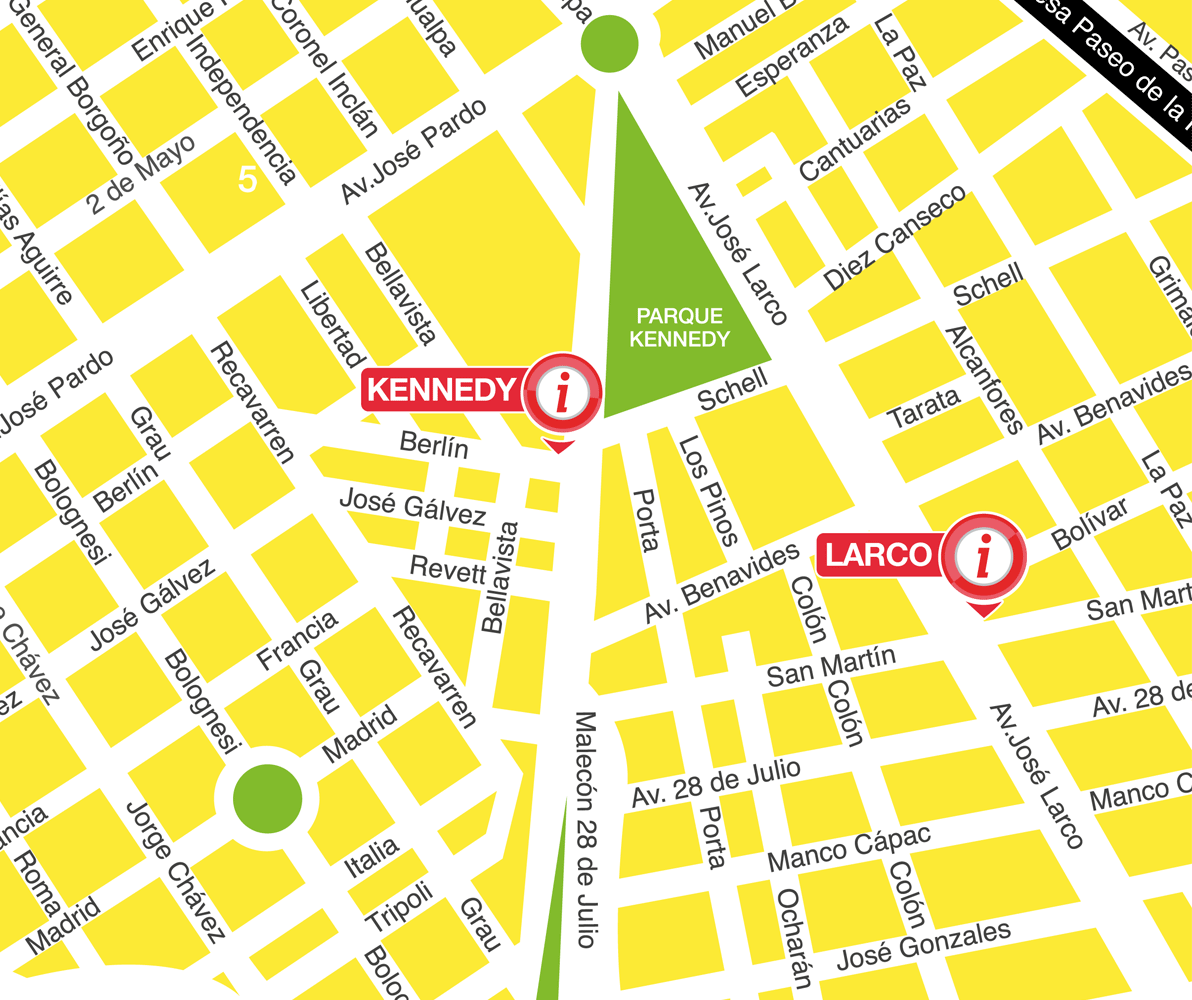
Tourist Information Center (Kennedy Park)
Av. Diagonal 494, Miraflores
Tourist Information Center (Larco)
Av. Larco 799, Miraflores
PLEASE MEET US 10 MINUTES BEFORE OUR DEPARTURE TIMES
We’re independent, licensed guides who conduct FREE Tours on a tips-only basis, thereby guaranteeing that you receive a tour of the highest quality. We'll never pressure you to tip; we believe that, if money is given, it should be voluntary and in direct proportion to the quality of the tour and the budget of the traveller.
