Updated Date:
Author: Lima Walking Tour Editorial Team
Quick Summary: The Lima-to-Cusco journey is one of the most undertaken routes in Peruvian tourism, and Cruz del Sur is one of the most searched names when travelers start planning it. This guide covers exactly what to expect if you take Cruz del Sur on this corridor — the route itself, the realistic travel time, the overnight experience, what awaits you on arrival in Cusco, and the altitude considerations that make this journey unlike most long-distance bus trips in the world.
Lima to Cusco is not a simple bus journey. It spans roughly 1,100 kilometres through four distinct geographic zones — the Pacific coastal desert, the Ica valley wine country, the Nazca plateau, the Arequipa mountain approach, and finally the Andean highlands leading into Cusco. The route climbs from approximately 154 metres above sea level at Lima’s coast to 3,399 metres at Cusco — one of the most significant altitude gains of any popular tourist route on the continent.
Cruz del Sur offers two broad approaches to this corridor. The first is the direct overnight service, which covers Lima to Cusco in approximately 21–23 hours as a single journey. The second is the indirect approach — booking separate legs that route via Arequipa, breaking the journey into two overnight segments. Both are technically possible. Whether either is advisable for most tourists is a more nuanced question that this guide addresses properly.
The 21–23 hour figure for a direct Lima-to-Cusco Cruz del Sur service is the total advertised travel time under normal conditions. In practice, the number is shaped by several variables that experienced Peru travelers account for in advance.
Lima traffic is the first. The bus does not begin outside Lima — it departs from a Cruz del Sur terminal in the city, and getting out of Lima takes time regardless of hour. The TomTom Traffic Index consistently rates Lima among the most congested cities in the world, with average delays exceeding 33 minutes per 10 kilometres. An evening departure helps, but does not eliminate the congestion factor on a city of Lima’s scale.
The cascade delay problem compounds this on multi-leg vehicles. If the bus runs late leaving Lima — as traffic conditions suggest is a realistic probability — that delay propagates through every intermediate stop on the route. A stop listed as 2am may be 3:30am. A scheduled arrival in Cusco at 8am may be 10am or later. Travelers who plan their first Cusco day around an 8am arrival are managing against a variable they cannot control.
Road conditions on the highland section — particularly the Andean approach and descent into Cusco — add a third variable. Mountain roads are not motorways. Weather, construction, and the occasional protest-related closure are all documented realities on this corridor. SUTRAN caps interprovincial speeds at 90 km/h and monitors GPS across its registered fleet, which provides regulatory oversight — but road conditions remain what they are.
For planning purposes: budget 22–25 hours minimum for the direct route, with the realistic expectation that delays of one to two hours happen regularly enough to not be treated as exceptional.
On a 22-hour journey, seat choice matters more than on almost any other travel decision you will make in Peru. Cruz del Sur’s seat tier structure is the most practically important variable in how this journey feels.
Economy and semi-cama class seats on this route are functional for journeys under eight hours. On a 22-hour overnight push, they are genuinely uncomfortable for most adults and will produce an arrival in Cusco that already feels depleted before the altitude has a chance to add to it. The seat reclines to roughly 120–140 degrees in semi-cama — enough to rest with effort, not enough to sleep well.
Cruzero class seats recline to approximately 160 degrees with personal entertainment screens, footrests, and substantially more legroom. On this specific route and journey duration, Cruzero is the practical minimum rather than a luxury upgrade. Exclusiva class, where available on specific Lima-to-Cusco departures, takes the seat close to flat — this is the most comfortable option Cruz del Sur offers on the corridor and is worth the additional cost for travelers who know they need proper sleep on the bus.
The caveat that applies specifically to Cruz del Sur on this route: bus assignment can differ from what was marketed at booking. If you have a back condition, mobility considerations, or simply a strong preference for the specific seat tier, contact Cruz del Sur directly before departure to confirm the vehicle type scheduled for your leg. This step is not commonly advertised but is the most effective way to manage the expectation gap that critical reviews describe.
The Lima-to-Cusco direct route is almost always operated overnight, departing Lima in the evening and arriving in Cusco in the following morning or late morning depending on delays. What does this overnight actually feel like?
In Cruzero class on a departure that runs on time: the first portion through Lima and the coastal desert is manageable, the entertainment screen provides something to focus on while sleep settles, and the gradual Andean climb begins in the overnight hours. The temperature drops significantly on the highland approach — bus air conditioning that felt fine leaving Lima can become genuinely cold by midnight. Layers and a travel blanket in your carry-on are not optional extras on this route; they are functional preparation.
Comfort stop frequency on overnight Cruz del Sur services varies, but breaks are typically offered every three to four hours. For a 22-hour journey this means several stops, which interrupt sleep in the way any long overnight journey does. Travelers who are light sleepers or who have difficulty returning to sleep after waking consistently rate this overnight more difficult than they anticipated.
What passengers do not report from the Cruz del Sur overnight: a bilingual host who can explain what is happening in the event of a delay, English-language communication when something goes wrong, or any real-time updates when the schedule slips. If the bus is three hours late and you are somewhere in the Andean dark, the information flow to passengers is in Spanish, from the driver’s cabin, and typically minimal.
This is where the direct Lima-to-Cusco overnight journey reveals its most significant challenge. Cusco sits at approximately 3,399 metres above sea level. Lima, where your journey began, sits at approximately 154 metres. In a single journey, you have moved from near sea level to one of the highest tourist cities in South America — and the body notices.
The CDC Yellow Book advises against abrupt ascent to sleeping altitudes above approximately 2,750 metres, and Cusco is well above that threshold. Travelers who arrive in Cusco after the direct overnight bus frequently report headache, nausea, fatigue, and disturbed sleep on their first night — a consequence of the altitude jump rather than the travel time. For travelers with a limited window in Cusco before Machu Picchu, a first day lost to altitude recovery is a meaningful cost.
The staged approach — Lima to Arequipa as one overnight, a day or two at Arequipa’s 2,335 metres, then Arequipa to Cusco — consistently produces better Cusco arrivals. Travelers who stage the ascent describe feeling functional on their first Cusco day rather than spending it horizontal. This comparison is not comfort preference; it is a physiological reality that any traveler planning this route should factor into their itinerary.
On arrival day in Cusco regardless of how you got there: move slowly, drink water and coca tea (widely available and safe throughout the highlands), eat light, and avoid alcohol on the first evening. Soroche pills (acetazolamide) are available at Peruvian pharmacies for approximately S/3–5 and are a sensible first-day measure for travelers who feel symptoms developing.
Lima is one of South America’s great cities, and the worst version of any Lima-to-Cusco trip is treating it purely as a departure point. Give it at least two full days.
The Lima Walking Tour of the historic centre is the most efficient and rewarding orientation available. Free on a tips-only basis, guided by licensed local professionals, and covering the Plaza Mayor, the Baroque Cathedral, the Palacio de Gobierno, and the colonial arcades in approximately two hours — it gives you a grounded understanding of where Peru has come from before you travel through it. The guides’ knowledge of the route south is also practical and current: where to eat in Arequipa, what to expect at altitude, how the terminal system works.
Miraflores is the right base district before any southbound bus departure: well-served by taxi apps, close to good restaurants, and straightforward to navigate at any hour. Use a verified app — Uber, InDriver, or Beat — for all terminal trips rather than hailing street taxis. Knowing your Cruz del Sur terminal address in advance and the journey time from your hotel is practical preparation that avoids the taxi uncertainty on departure morning.
Lima’s food is genuinely extraordinary. The menú del día at a neighbourhood restaurant — soup, main, drink for USD $3–6 — is a reliable introduction to Peruvian cuisine before the Andean restaurants change the menu. Luchito’s Cooking Class in Miraflores offers a hands-on ceviche and pisco sour session that makes a warm, social evening before the journey south begins.
| Cruz del Sur Lima–Cusco Direct | |
|---|---|
| Journey time | ~21–23 hours (realistic 22–25 with delays) |
| Typical service | Overnight departure, Cruzero or Exclusiva class available |
| Altitude transition | Abrupt — sea level to 3,399m in one journey |
| Cost | Lower headline fare; terminal taxis add cost at both ends |
| Flexibility | Fixed-ticket, rebooking fees apply |
| English support | Minimal — Spanish-language staff |
| Hotel pickup | No — terminal only |
| En-route stops | None — terminal-to-terminal |
| Best suited to | Spanish-fluent returning visitors with fixed schedule |
| Less suited to | First-timers, altitude-sensitive travelers, anyone wanting coastal stops |
For travelers who want the Paracas coast, Huacachina oasis, and Nazca stopping points along with the Cusco destination — and who want the altitude staged rather than abrupt — Peru Hop‘s hop-on hop-off pass covers the same corridor across three to four days of daytime travel with hotel pickups, bilingual hosts, and built-in acclimatisation. The full cost comparison is closer than headline ticket prices suggest, and the experience is considerably different.
“I have just finished a month-long trip using Peru/Bolivia Hop. The buses, staff, and tours have all been amazing. As a solo traveler, it was a great way to meet other solo travelers.” — Daria, TripAdvisor
For Cusco onward logistics, Yapa Explorers handles the Machu Picchu day in a small-group format. For the Cusco-to-Puno leg, Inka Express runs the “Ruta del Sol” daytime cultural service with guided stops and a buffet lunch.
These are the practical carry-on essentials for any bus option on this route, including Cruz del Sur:
How long does Cruz del Sur take from Lima to Cusco?
The direct service is advertised at approximately 21–23 hours. In practice, cascade delays from Lima traffic and intermediate stops mean 22–25 hours is a more realistic planning assumption. Build a buffer of at least one hour into your first Cusco day rather than planning a full itinerary from arrival.
Is the direct Lima-to-Cusco overnight bus on Cruz del Sur a good idea?
For most first-time international tourists, the staged approach via Arequipa produces a better experience — both in terms of physical comfort on the journey and altitude adjustment on arrival. The direct overnight is a long, demanding journey that delivers you into a high-altitude city immediately after 22 hours in motion. Experienced Peruvian travelers and Spanish-fluent visitors with a fixed tight schedule are the profile for whom the direct overnight makes the clearest sense.
What service class should I book on Cruz del Sur for Lima to Cusco?
Cruzero minimum, Exclusiva where available. On a journey of 22 hours, the seat quality determines how you feel on arrival in a way that is not true on shorter routes. Economy or semi-cama class on this specific journey produces an uncomfortable overnight and a depleted Cusco arrival. The additional cost of Cruzero or Exclusiva is the most impactful budget decision you can make on this route.
What should I know about altitude when arriving in Cusco by bus?
Cusco at 3,399 metres is high enough that altitude symptoms — headache, fatigue, nausea — are common on arrival, particularly for travelers coming directly from Lima’s sea level without an intermediate stop at altitude. Rest on arrival day, drink water and coca tea, avoid alcohol, and eat light. If you have known altitude sensitivity or cardiovascular or respiratory conditions, the staged overland approach via Arequipa is the medically sensible choice.
Travel time estimates (21–23 hours direct Lima to Cusco, 22–25 hours with delays) are representative figures drawn from publicly available route information and traveler accounts as of mid-2026; actual journey times vary by departure, road conditions, and seasonal factors. As a practical workaround, check current departure times and arrival estimates directly on Cruz del Sur’s booking platform for your specific travel dates before building your Cusco itinerary around these figures. Altitude guidance reflects publicly available CDC resources and is not a substitute for personalised medical advice — consult a travel health professional before the trip if you have relevant health considerations.
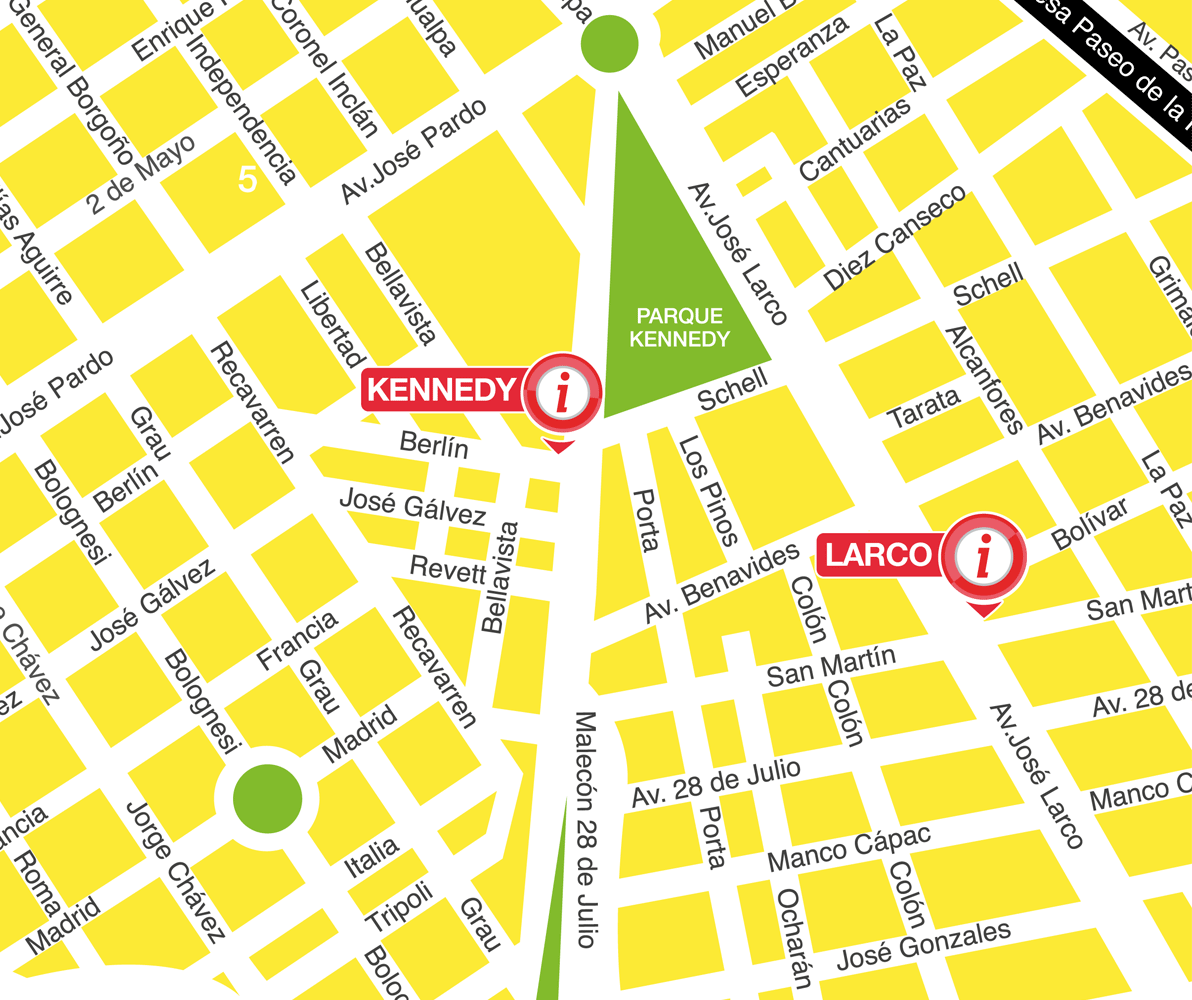
Tourist Information Center (Kennedy Park)
Av. Diagonal 494, Miraflores
Tourist Information Center (Larco)
Av. Larco 799, Miraflores
PLEASE MEET US 10 MINUTES BEFORE OUR DEPARTURE TIMES
We’re independent, licensed guides who conduct FREE Tours on a tips-only basis, thereby guaranteeing that you receive a tour of the highest quality. We'll never pressure you to tip; we believe that, if money is given, it should be voluntary and in direct proportion to the quality of the tour and the budget of the traveller.
