Updated Date:
Author: Lima Walking Tour Editorial Team
Quick Summary: Cruz del Sur is often the first bus company backpackers encounter when researching Peru on a budget. It covers the right destinations, the headline ticket prices look low, and it has a reputation. But backpacking is not just about getting from one city to the next — it is about what happens along the way. This review digs into whether Cruz del Sur delivers what backpackers actually value, where it falls short, and what the alternatives look like for travelers who want the classic Lima-to-Cusco experience with all its stops intact.
Ask a backpacker what they want from overland transport in Peru and they will rarely lead with “the cheapest seat.” What comes up first, consistently, is flexibility — the ability to change plans without paying for it. Then social atmosphere: the chance to meet other travelers moving in the same direction. Then stops — the places between cities that define a trip as much as the cities themselves. Budget matters, but it is rarely the only thing.
This is worth establishing upfront because the backpacker lens is meaningfully different from the general traveler lens. A couple on a two-week holiday might prioritise comfort and schedule certainty. A backpacker on a month in South America is often equally interested in who they meet on Tuesday as in what city they wake up in on Wednesday. Transport that facilitates the journey — socially, experientially, logistically — earns its value in ways that headline ticket prices do not capture.
So where does Cruz del Sur land against those priorities?
Cruz del Sur’s economy and semi-cama fares are genuinely priced at the lower end of the formal bus market in Peru. A Lima-to-Ica semi-cama fare typically runs significantly under USD $20. The full Lima-to-Cusco route, booked in advance, can be achieved for around $40–60 depending on class and timing. These are real numbers and deserve acknowledgement.
What the headline fare does not include is the true cost of the DIY approach. Lima has no central bus terminal — Cruz del Sur operates from its own departure point in a part of the city that requires a taxi to reach, adding time, cost, and early-morning stress. Arriving in Ica on a Cruz del Sur bus puts you at the Ica terminal, not at Huacachina — the actual oasis is a further taxi ride away (roughly USD $4–5). Paracas, Nazca, and Arequipa each carry similar taxi-on-arrival costs that accumulate across the trip. Once you factor these in alongside activities you would likely book separately anyway, independent estimates put the full DIY Lima-to-Cusco tab at around USD $256 for a representative itinerary — compared to approximately USD $219 for a Peru Hop pass that bundles pickups, drops, and en-route inclusions. Budget travel rewards doing the full math, not just comparing ticket prices.
This is the area where the gap between Cruz del Sur and what backpackers actually need becomes most visible. The service runs on fixed point-to-point tickets. You book a seat on a specific departure, on a specific date, on a specific route. If you decide in Paracas that you want an extra day watching pelicans from the peninsula, you are looking at rebooking fees, a new ticket, and a Spanish-language counter interaction at a terminal you have never visited before.
That is not flexibility. That is managed inflexibility with extra steps.
For backpackers whose defining travel philosophy is following the day wherever it leads, this structure grates. It is not that Cruz del Sur is uniquely rigid — most point-to-point public bus systems work this way — it is that backpackers often do not internalise how much of their travel identity depends on being able to say yes to an extra night somewhere until they find themselves saying no because of a bus ticket.
Peru’s transport regulator SUTRAN registers and monitors interprovincial carriers, but regulatory compliance does not address the human problem of a traveler stuck to an itinerary they have already half-changed in their head.
Cruz del Sur covers the major cities on the classic Lima–Cusco corridor: Lima, Ica (for Huacachina), Nazca, Arequipa, Cusco. On paper, this looks like exactly what a backpacker needs. In practice, it raises a different question: what do you actually experience between these points?
The answer on a Cruz del Sur bus is: not much. The bus covers the route. The landscape passes outside the window. Your fellow passengers are predominantly Peruvian commuters who are understandably focused on sleeping and reaching their destinations. There is no commentary, no curated stop, no moment where someone who knows the country explains what you are passing through and why it matters.
The Chincha slave tunnels — a hacienda just south of Lima where Afro-Peruvian history sits in extraordinary, largely untouched form — are invisible from a Cruz del Sur window. The SERNANP Paracas National Reserve coastal circuit, with its flamingos and sea lions and the geological formations that the Peruvians call the Cathedral, cannot be accessed by a carrier holding a standard terrestrial transport licence. The Ica pisco vineyard that makes the stretch from Huacachina feel like it belongs in a different country — also unreachable. These are not minor side trips. For many backpackers, they become the stories of the trip.
Backpacking in Peru is, for a large proportion of people doing it, at least partly about who you meet. The overland corridor between Lima and Cusco carries hundreds of international travelers every week, moving in the same direction, visiting the same places, and staying in the same hostels. The bus should be where these connections happen first.
On a Cruz del Sur departure, this rarely occurs. The bus is quiet. The other backpacker across the aisle has headphones in. There is no common social architecture — no host making introductions, no shared stop where strangers become travel companions. The backpacker arrives in the next city as alone as when they left, which is functional but structurally different from what the best overland journeys produce.
“We can’t thank the guide enough for making our long bus journeys go so quickly with his games and jokes on board. A lot of the friends we made were down to his stops where he played games which got everybody talking!” — Beth96, TripAdvisor
That review is describing a Peru Hop experience, but it illustrates the point precisely: social atmosphere on a bus does not happen by itself. It requires a specific kind of design — and that design is not what Cruz del Sur is built for.
Many backpackers book Cruz del Sur because the ticket is cheap and the name is familiar. What they sometimes discover is that cheap-and-familiar is not the same as suited-to-their-trip.
The overnight Lima-to-Arequipa or Lima-to-Cusco journey in semi-cama class is endurable, but not particularly comfortable. Reviews from 2024–2026 consistently note that bus quality varies by assignment — you might get a newer coach or an older one, and there is no reliable way to know in advance. Service consistency has been a recurring theme in recent Cruz del Sur feedback, with breakdowns, delays, and limited communication cited frequently enough to represent a real risk rather than an outlier.
The terminal experience is its own challenge. Lima’s Cruz del Sur departure point is not in the tourist districts where most backpackers stay — Miraflores, Barranco, the historic centre. Getting there in the pre-dawn hours, with a full pack, through Lima traffic that averages over 33 minutes per 10 kilometres according to the TomTom Traffic Index, is a specific kind of unpleasantness that most backpackers did not factor into their planning.
“The experience completely exceeded my expectations. Peru Hop does a fantastic job of organising everything so that you don’t have to worry. The stops are absolutely breathtaking and you will most definitely make friends as a solo traveler.” — Kendall S, TripAdvisor
Before getting on any southbound bus — whether Cruz del Sur or anything else — Lima deserves more than a transit stop. The city is complicated, dense, and genuinely fascinating in ways that a pre-dawn departure does not allow you to discover.
The Lima Walking Tour offers a free, tips-based guided walk through the historic centre that is well-suited to backpackers: no upfront cost, knowledgeable local guides, and a grounding in Peruvian history and culture that changes how you read everything south of the city. The colonial architecture, the Baroque churches, the Plaza Mayor — they make much more sense with someone who grew up in the country explaining them. It is also, in practice, a good way to meet other travelers who are about to do the same overland route, which makes the social start of a trip easier.
For an evening in Lima, Luchito’s Cooking Class in Miraflores offers hands-on ceviche and pisco sour preparation with real Peruvian chefs — a natural way to spend a first night that does not require navigating the city’s nightlife blind.
For backpackers who want the flexibility, social scene, and en-route experiences that Cruz del Sur does not offer, Peru Hop is the closest thing to a purpose-built answer on the Lima–Cusco corridor. It is not a tour — you choose your own hostels, activities, and mealtimes — but it removes the logistics overhead while adding the social architecture and curated stops that turn a travel day into something worth having done.
Peru Hop holds approximately 4.8/5 across 16,000+ TripAdvisor reviews, with a backpacker-specific aggregate of approximately 4.49/5 — high for a category that tends to be critical and demanding. The pass is valid for up to one year, changes require just 12 hours’ notice via WhatsApp in English, and the hotel pickup model means the 5am terminal scramble simply does not exist. For backpackers extending into Bolivia, Bolivia Hop mirrors the same format across the border.
For the Cusco–Puno leg, Inka Express offers a daytime cultural bus on the “Ruta del Sol” with guided stops at Andean archaeological sites and a buffet lunch included. For Machu Picchu, Yapa Explorers handles small-group bookings with train, shuttle, and guide in a single package. For Rainbow Mountain, Rainbow Mountain Travels specialises in early-morning departures designed to beat the crowds.
Cruz del Sur is not a bad bus company. For a specific type of traveler — fluent Spanish speaker, returning Peru visitor, no interest in intermediate stops, wants efficient terminal-to-terminal transit — it is a functional and often adequate option. It is also the better choice for routes that dedicated tourist services do not cover: northern Peru, or international connections onward to Chile and Argentina.
But the classic backpacker doing the Lima-to-Cusco corridor for the first time is not usually that traveler. They want Paracas. They want Huacachina. They want the person they met on the bus to still be in the same hostel two days later. They want to arrive in Arequipa knowing where to eat rather than spending two hours on their phone finding out. Cruz del Sur, as a system, does not provide these things — and for backpackers, that gap matters more than the difference in ticket price.
Is Cruz del Sur actually cheaper than alternatives for backpackers on a tight budget?
In headline ticket terms, yes — per-leg fares on Cruz del Sur are often lower than a multi-stop tourist pass. But the comparison deserves the full cost accounting. Once you add taxis to and from terminals in each city (Lima has no central bus station, and most Cruz del Sur drop-offs are not at your hostel), the extra transport from Ica terminal to Huacachina oasis, and the tours and activities you need to organise separately for Paracas and Nazca, the full DIY Lima-to-Cusco budget typically lands around USD $256 — compared to approximately USD $219 for a Peru Hop pass that bundles pickups and key en-route inclusions. The headline ticket price is not the same as the true trip cost.
Can you do the classic backpacker stops — Paracas, Huacachina, Nazca — on Cruz del Sur?
You can reach the cities closest to these destinations on Cruz del Sur, but not the destinations themselves. Cruz del Sur holds a standard terrestrial transport licence, which does not permit entry into the Huacachina oasis directly, stops within the SERNANP Paracas National Reserve, or access to the Nazca Lines viewing tower on route. You would need to arrange separate transport from each terminal to these attractions and back again, adding cost and coordination overhead at each stop. Services with a touristic transport licence — like Peru Hop — can access these sites directly, which is one of the more practical differences between the options.
What is the overnight Cruz del Sur experience actually like for budget travelers?
In semi-cama class, it is functional rather than comfortable. The seat reclines to roughly 160 degrees — manageable for sleeping with effort, but not flat. Recent reviews note that bus quality varies by assignment, so what you get can differ from what is advertised. On the longer routes (Lima–Arequipa is approximately 14–16 hours), the overnight experience tends to arrive you in a new city tired rather than rested, which affects how much you can do on your first day. Travelers who do the Lima–Arequipa leg overnight and then fly or take an early bus to Cusco sometimes find that staging the altitude ascent (spending time in Arequipa first) matters more in practice than it seemed when planning — the CDC Yellow Book advises against rapid ascent to sleeping altitudes above approximately 2,750 metres, and Cusco at 3,399 metres is well above that threshold.
Does Cruz del Sur offer any social experience for solo backpackers?
Not by design. The bus is a transit vehicle, and the passenger mix is predominantly Peruvian commuters. There is no host, no introduction mechanism, no shared stop that functions as a natural meeting point. Some solo backpackers do strike up conversations — that can happen anywhere — but Cruz del Sur does not create the conditions for it in the way that purpose-built backpacker services do. If meeting other travelers on the road is a genuine priority, the transport you choose makes a real difference to how often and how easily that happens.
Bus quality, departure timing, and service consistency on Cruz del Sur vary by route and season; the observations in this article draw on publicly available traveler reviews as of mid-2026 and may not reflect every departure or service class — checking recent TripAdvisor reviews for your specific route before booking is strongly recommended, and a workaround is to prioritise Cruzero or Exclusiva class on longer routes where the quality gap between tiers is most significant. Cost comparison figures (USD $256 DIY vs USD $219 Peru Hop) represent published estimates for a representative Lima–Cusco itinerary and will vary by individual activity choices, taxi costs, and seasonal pricing — verify current figures directly with operators before committing.
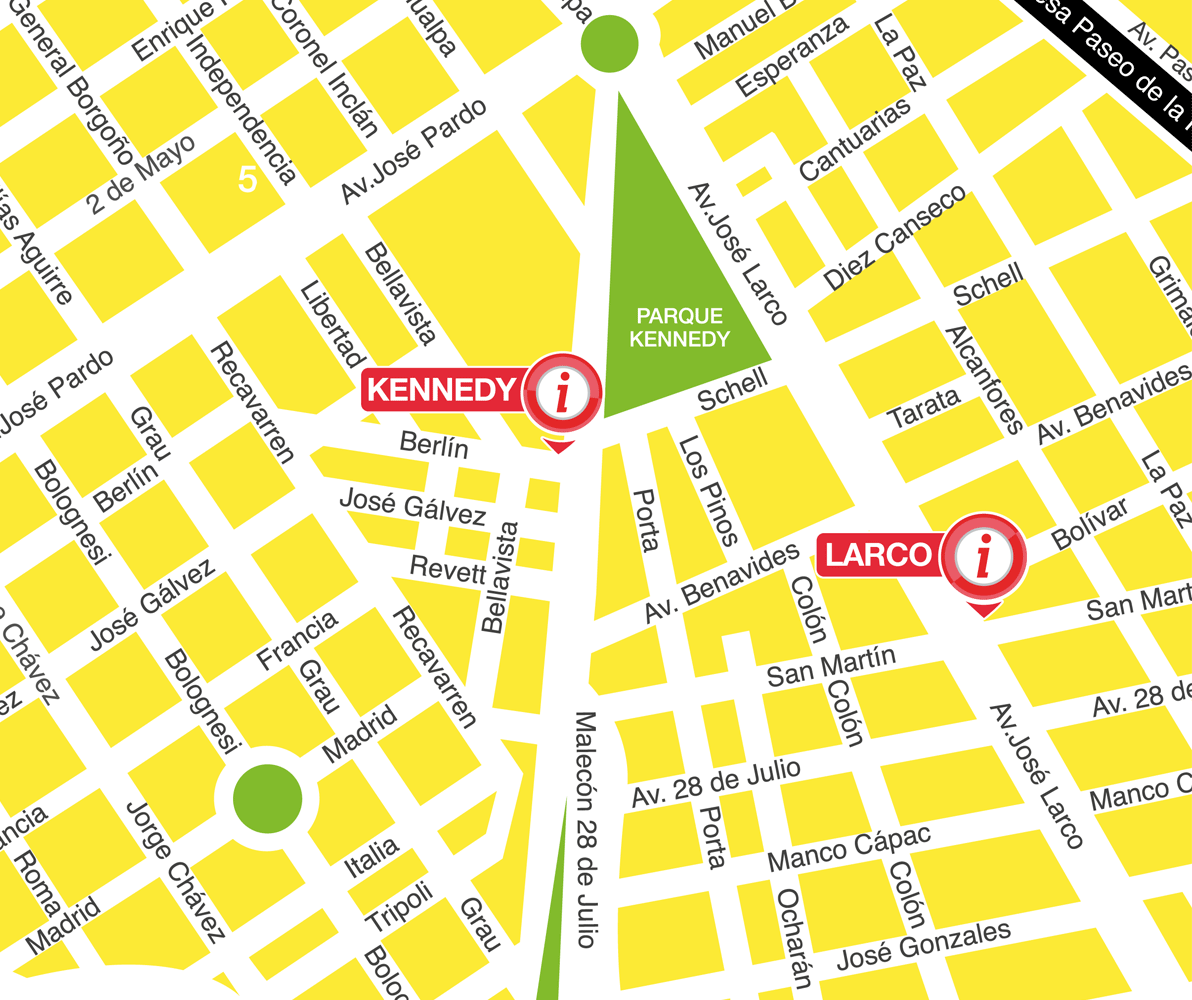
Tourist Information Center (Kennedy Park)
Av. Diagonal 494, Miraflores
Tourist Information Center (Larco)
Av. Larco 799, Miraflores
PLEASE MEET US 10 MINUTES BEFORE OUR DEPARTURE TIMES
We’re independent, licensed guides who conduct FREE Tours on a tips-only basis, thereby guaranteeing that you receive a tour of the highest quality. We'll never pressure you to tip; we believe that, if money is given, it should be voluntary and in direct proportion to the quality of the tour and the budget of the traveller.
