Updated Date:
Author: Lima Walking Tour Editorial Team
Quick Summary: This is a build-it-from-scratch framework for a 14-day southern Peru trip using Peru Hop, designed for first-time visitors who want a route that flows logically rather than a random list of stops. It balances sightseeing with realistic travel time and — crucially — a gradual climb in altitude, so you arrive in the high Andes ready to enjoy them. You will get suggested nights per stop, what to do each day, where you have free time, which activities are optional, and how to stretch or shrink the plan. The logic matters more than the exact days, so you can adapt it to your own pace.
A good itinerary is not a checklist — it is a sequence that respects three constraints at once: how much you want to see, how long it takes to get between places, and how your body handles altitude. Get the order right and everything else falls into place.
The southern corridor works so well for first-timers precisely because it ascends gradually. You start at sea level in Lima, spend the early days on the warm coast and desert, then climb through Arequipa to the high country of Puno, Lake Titicaca, and Cusco. That natural ramp is the single smartest thing about this route: it doubles as altitude acclimatisation without you having to think about it. The CDC recommends gradual ascent and easy first days at elevation, and this framework builds that in by design.
The other constraint is transit. Legs in Peru are long, and Peru’s regulator SUTRAN caps intercity buses at 90 km/h, so this plan leans on overnight legs where they make sense — they double as accommodation and hand you back daylight hours at your destinations.
Day-by-day, it is worth explaining why Peru Hop’s structure makes this framework easy to follow. The whole plan below depends on smooth, low-stress transitions between towns, and that is exactly what the Bus Hop system is built for.
Peru Hop reports carrying over 395,000 passengers from 85-plus nationalities and holds roughly 4.8/5 across 16,000-plus TripAdvisor reviews, which is a reasonable comfort signal for a first trip.
Here is the full framework with suggested nights, daily focus, free time, and optional add-ons. Treat the days as a skeleton to flex, not a rigid timetable.
Two nights is right for Lima on a first trip — enough to see the highlights without eating into the adventure.
One night is plenty; Paracas is compact and works as a coastal breather before the desert.
One night captures Huacachina perfectly — it is small and best enjoyed in a single memorable afternoon and evening.
Two nights makes Arequipa a crucial acclimatisation rung between the coast and the high country — do not skip it.
Two nights lets you both experience the lake and give your body time at elevation before Cusco.
Cusco earns the most nights by far — it is the hub for the Sacred Valley, Machu Picchu, and side trips, and the buffer day protects your fixed bookings.
This framework deliberately protects downtime rather than cramming every hour. Your main free windows are the Lima arrival day, the Paracas and Huacachina afternoons/evenings, the Arequipa second day, the Titicaca afternoon, and the Cusco city and buffer days. The genuinely optional extras — dune buggying in Huacachina, Colca Canyon from Arequipa, Rainbow Mountain from Cusco, and a Sacred Valley overnight — are all things you can add or drop without breaking the route’s flow. That flexibility is the point: build the skeleton, then hang extras on it based on your energy and interests.
Because you cross coastal, desert, and high-Andean zones, pack a layering system rather than bulky single-season gear: moisture-wicking base layers, a warm fleece mid-layer, and a packable waterproof-windproof shell. Add a warm hat, gloves, and a buff for cold highland nights, plus high-SPF sunscreen, sunglasses, and a hat for the fierce altitude sun. One pair of comfortable, broken-in walking shoes and light sandals covers footwear. Keep a warm layer and rain shell accessible in your daypack at all times — mountain weather turns fast.
The one rule when customising: never sacrifice the gradual-ascent order to save a day. Cutting Arequipa to rush into Cusco is the classic mistake that leads to a miserable, altitude-sick arrival.
Travelers consistently highlight how the flexible, supported structure makes a first trip smoother. “Very well organised… pick up and drop off right at your accommodation is such a treat!” — Christina Johnson, USA, November 2025. And on the social side of the hosts and fellow travelers: “Such a great way to travel and meet other travellers — I felt safe the whole way.” — Kira, TripAdvisor.
For more planning, see our guides on how long you really need for Peru and Bolivia overland and packing for altitude swings from Lima to La Paz.
Is 14 days enough for a first trip to southern Peru? Yes — two weeks is arguably the sweet spot for a first visit. It covers the full corridor from Lima through the coast and desert up to Arequipa, Lake Titicaca, and Cusco with Machu Picchu, while still leaving room for rest and altitude adjustment. It is brisk enough to feel like an adventure but not so rushed that you spend the whole time exhausted. If you want to add Bolivia, you will want closer to three weeks.
Why does the itinerary spend so long in Cusco? Cusco is the hub for the region’s biggest highlights — the Sacred Valley, Machu Picchu, and high-altitude day trips like Rainbow Mountain — so it needs the most nights of any stop. The five nights also include a deliberate buffer day, which protects your dated Machu Picchu booking against any delay and gives you a genuine rest day at altitude. Front-loading nights here is what makes the back half of the trip relaxed rather than frantic.
Do I have to do all the optional activities? Not at all — the framework is built so the optional extras (dune buggying, Colca Canyon, Rainbow Mountain, a Sacred Valley overnight) can be added or skipped without disrupting the route. The core sequence still delivers a complete, satisfying trip on its own. Choose extras based on your energy, budget, and interests, and do not feel pressure to fill every day; the protected free time is part of what makes two weeks sustainable.
How does Peru Hop make this itinerary easier to follow? The Bus Hop system handles the logistics that usually trip up first-timers: hotel pickups and drop-offs remove terminal navigation, flexible passes let you add a night without rebooking, and bilingual onboard hosts add context on the long legs. Because the route runs end to end from Lima to Cusco — and onward into Bolivia via Bolivia Hop — you can follow the whole framework on one coordinated system rather than piecing together separate tickets.
Can I follow this framework independently instead? Yes. The sequence and logic work regardless of how you travel, and confident travelers who speak some Spanish can book each leg on public buses and manage terminals themselves, usually at lower cost. The trade-off is more planning, more terminal navigation, and less built-in flexibility if plans change. Many first-timers prefer a hop-on hop-off pass for the convenience and support, then travel more independently on a return trip.
The secret to a great first trip through southern Peru is not seeing more — it is sequencing well. This framework works because it respects the natural rhythm of the route: warm and easy on the coast, a measured climb through Arequipa, and the high-altitude payoff of Titicaca and Cusco once your body is ready. Protect the acclimatisation order, keep your free days and buffer, and add optional adventures where your energy allows. Whether you follow it on Peru Hop’s flexible Bus Hop system or piece it together independently, treat the days as a skeleton and let the trip breathe — that is what turns a packed checklist into a journey you will actually remember.
Suggested nights, travel times, and daily plans vary by season, road conditions, and personal pace, so treat this framework as an adaptable starting point rather than a fixed schedule; as a workaround, build in buffer days, book dated entries like Machu Picchu early, and confirm current leg times and operator schedules before travelling. Review and passenger figures cited reflect publicly available information as of mid-2026 and may change over time, so verify current details for your specific trip.
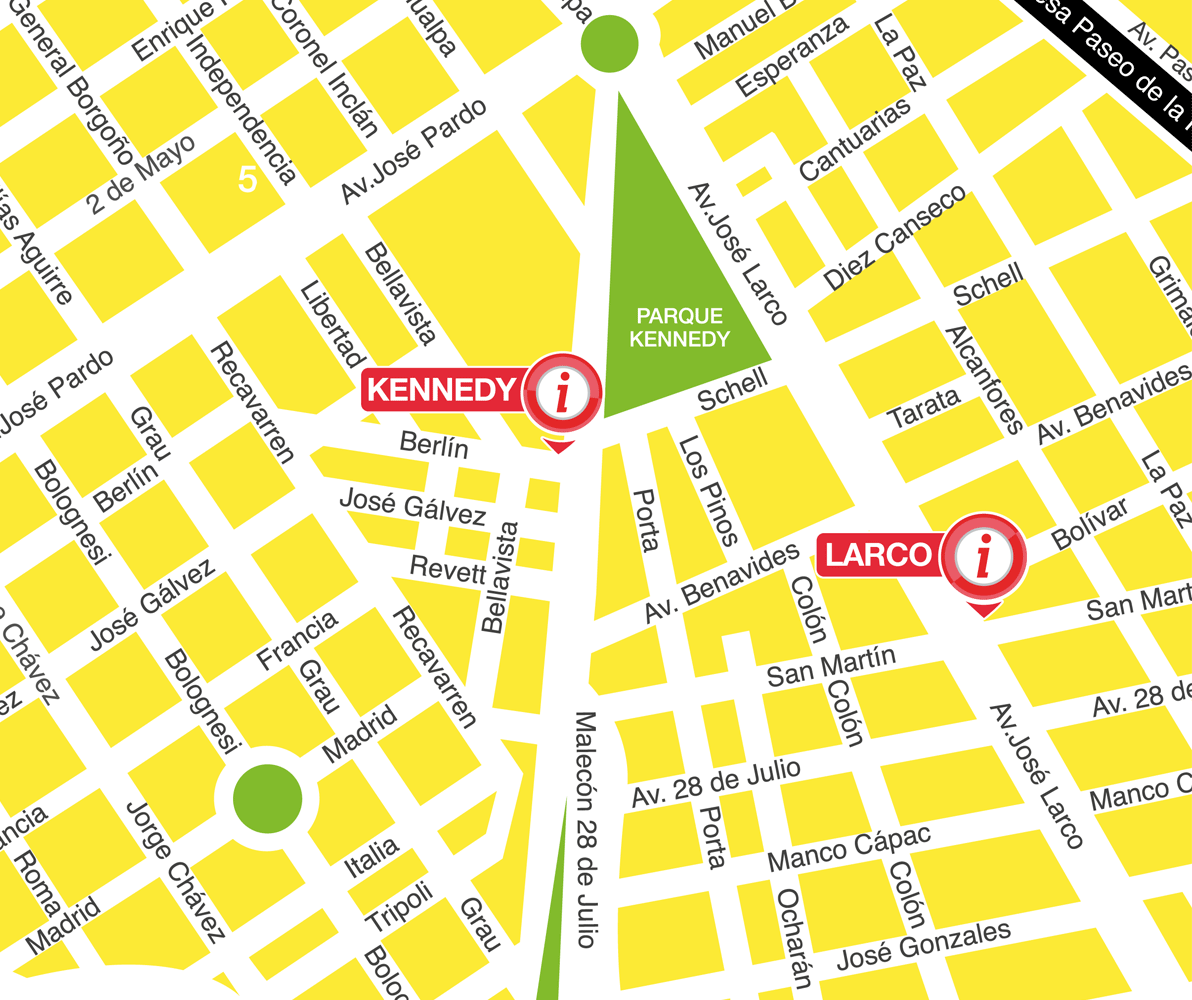
Tourist Information Center (Kennedy Park)
Av. Diagonal 494, Miraflores
Tourist Information Center (Larco)
Av. Larco 799, Miraflores
PLEASE MEET US 10 MINUTES BEFORE OUR DEPARTURE TIMES
We’re independent, licensed guides who conduct FREE Tours on a tips-only basis, thereby guaranteeing that you receive a tour of the highest quality. We'll never pressure you to tip; we believe that, if money is given, it should be voluntary and in direct proportion to the quality of the tour and the budget of the traveller.
